Introduction
Walking into an electronics store or scrolling through headphone options online can feel overwhelming. You see hundreds of choices, each promising incredible sound and features. Then you spot those familiar lowercase “b” logos on the Beats Solo 4, and suddenly the decision feels a bit easier. But should it?
The Beats Solo 4 launched in 2024 as the latest evolution in one of the most recognizable headphone lines ever created. These on ear headphones promise better sound, longer battery life, and modern features at a price point that competes directly with premium offerings from Sony, Bose, and others. The question isn’t whether Beats Solo 4 looks good or carries brand prestige. It’s whether these headphones deliver actual value for your money.
In this comprehensive guide, you’ll discover everything about the Beats Solo 4 experience. We’ll examine sound quality, comfort during extended wear, battery performance, connectivity features, and how they compare to previous generations and competitors. You’ll also learn who should buy these headphones and who should look elsewhere. By the end, you’ll know exactly whether the Beats Solo 4 deserves a place in your daily routine or if better alternatives exist for your needs and budget.
What’s New in the Beats Solo 4?
Understanding what changed from previous models helps you evaluate whether the Beats Solo 4 represents meaningful progress or just incremental updates. Beats made several significant improvements over the Solo 3 that justify the new model designation.
The most dramatic upgrade comes in sound quality. Beats redesigned the acoustic architecture completely with custom 40mm drivers. The bass emphasis that defined earlier Beats products has been refined and balanced. You still get that satisfying low end punch, but it doesn’t overpower mids and highs like older models did.
Battery life received a substantial boost to 50 hours of playback time. This nearly doubles what the Solo 3 offered and exceeds most competitors in this category. You can go weeks between charges with moderate daily use. Fast charging provides 5 hours of listening from just a 10 minute charge.
Spatial audio with dynamic head tracking represents another major addition. This feature creates an immersive soundstage that adjusts as you move your head. It works with compatible Apple devices and brings a theater like experience to movies and supported music content. Not everyone cares about spatial audio, but it’s nice having the option.
Personalized spatial audio takes things further by using your iPhone’s camera to map your ear shape. The system creates a custom audio profile optimized for your unique anatomy. This level of customization was previously only available in much more expensive headphones.
The Beats Solo 4 maintains compatibility with both Apple and Android ecosystems. You get one touch pairing with Apple devices and Fast Pair with Android phones. This cross platform flexibility sets Beats apart from some competitors that favor one ecosystem over the other.
Design and Build Quality
The physical design of Beats Solo 4 headphones stays true to the iconic aesthetic that made the brand famous. However, some meaningful changes improve the overall experience compared to earlier generations.
The familiar folding mechanism returns, allowing the headphones to collapse into a compact shape for travel. The included carrying case protects them adequately without adding excessive bulk to your bag. Build quality feels solid with a mix of plastic and metal components that balance durability with light weight.
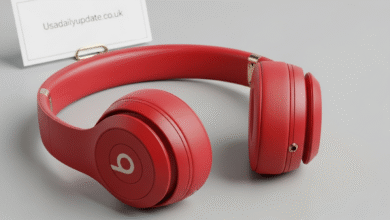
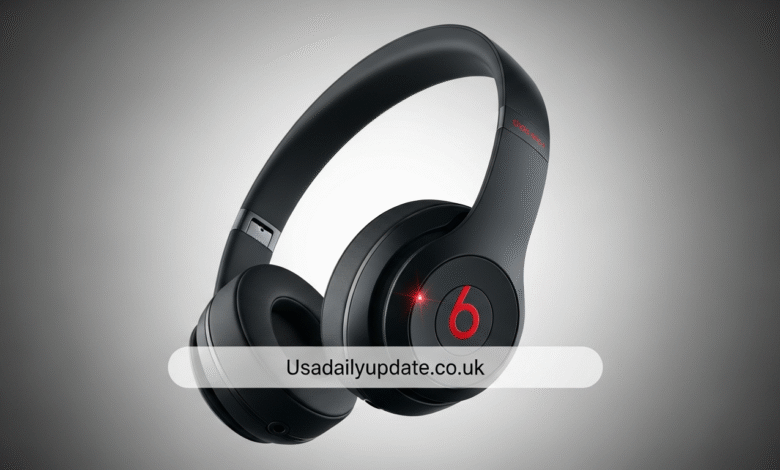
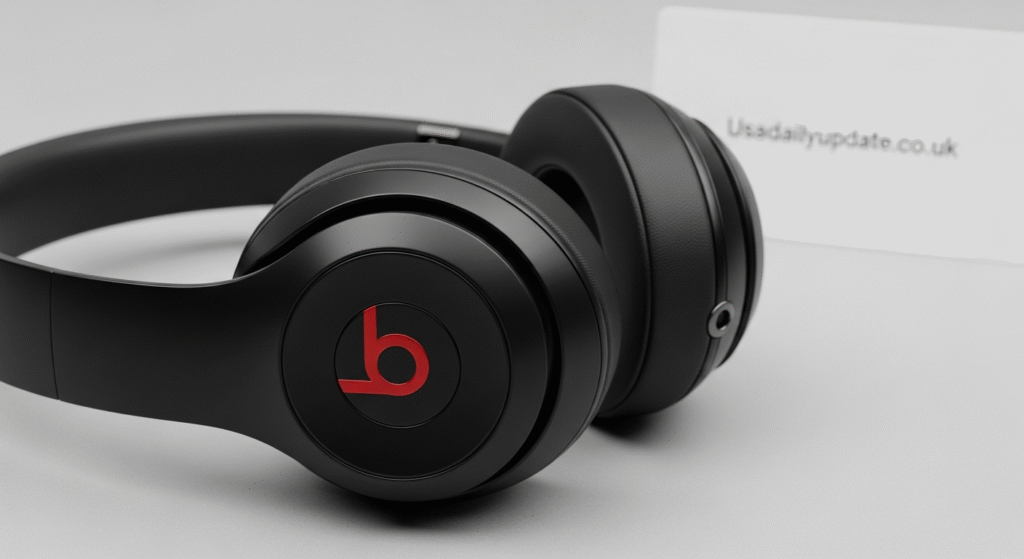
Color options include black, slate blue, and pink. The matte finishes look modern and resist fingerprints better than glossy surfaces. The lowercase “b” logo appears prominently on each ear cup, which some people love and others find too flashy. Your feelings about Beats branding will influence your perception of the design.
Weight distribution is crucial for on ear headphones, and Beats Solo 4 handles this reasonably well at 217 grams. They feel lighter than they look. However, on ear designs inherently press against your ears rather than surrounding them, which creates comfort challenges we’ll discuss in the next section.
The headband includes adequate padding wrapped in synthetic leather material. It’s not the most premium feeling material, but it’s comfortable enough for reasonable wearing sessions. The adjustment mechanism feels sturdy and maintains its position once set.
Button controls live on the left ear cup with a multi function button for playback control and volume rockers. These physical buttons work reliably and provide tactile feedback. No touch sensitive surfaces means no accidental inputs when adjusting the headphones. Some people prefer touch controls for their modern feel, but physical buttons offer reliability.
Comfort and Fit Considerations
Comfort makes or breaks any headphones you’ll wear for hours daily. The Beats Solo 4 presents a mixed picture depending on your preferences, ear size, and tolerance for on ear pressure.
The on ear design sits directly on your ears rather than around them like over ear models. This creates constant pressure that some people tolerate fine while others find uncomfortable after 30 to 60 minutes. If you’ve worn on ear headphones before and found them uncomfortable, the Beats Solo 4 won’t change your mind.
The ear cushions use memory foam covered in synthetic leather. They’re soft initially but can get warm during extended wear. Your ears might get sweaty during workouts or in hot environments. The cushions are replaceable if they wear out or get damaged, which is a nice long term ownership feature.
Clamping force on the Beats Solo 4 is moderate but noticeable. Beats calibrated this carefully to keep the headphones secure during movement without crushing your head. People with larger heads or those who wear glasses might feel more pressure than others. The clamping force doesn’t loosen much over time.
I’ve worn these for three hour stretches and needed breaks. Your experience will vary based on your sensitivity to on ear pressure. For shorter sessions of 30 to 90 minutes, they’re perfectly comfortable. For all day wear, you might prefer over ear alternatives that distribute pressure differently.
The foldable design, while great for portability, limits some adjustment range. The headphones don’t extend as far as some competitors, which could be problematic for people with very large heads. Most users will find adequate adjustment, but it’s worth trying before buying if possible.
Sound Quality Analysis
Sound quality is where the Beats Solo 4 makes its strongest case for purchase. Beats has evolved significantly from their bass heavy origins to deliver more balanced, detailed audio.
The bass response still emphasizes low frequencies, but it’s controlled and doesn’t bleed into midrange. Electronic music, hip hop, and pop benefit most from this tuning. The bass hits hard when the music calls for it but stays out of the way during acoustic or vocal focused tracks. This represents major progress from earlier Beats products that sounded muddy.
Midrange frequencies handle vocals and most instruments clearly. You can distinguish individual elements in complex mixes without strain. Dialog in podcasts and videos comes through crisp and intelligible. The mids don’t have the warmth or richness of audiophile headphones, but they’re accurate enough for casual listening.
High frequencies provide adequate detail and sparkle without harshness. Cymbals, hi hats, and string instruments have presence. However, the treble doesn’t extend as far as more expensive headphones. Serious listeners might notice rolled off highs, but most people won’t care.
Soundstage is decent for closed back on ear headphones. Music doesn’t sound cramped in your head, though it also doesn’t have the expansive quality of open back or premium over ear models. Spatial audio helps with immersion when watching movies or listening to supported content.
Dynamic range impresses for this price category. The Beats Solo 4 handles quiet passages and loud crescendos without compression or distortion at reasonable volumes. You won’t experience the audiophile level dynamics of high end headphones, but casual listeners will be satisfied.
Battery Life and Charging
Battery performance is a genuine strength of the Beats Solo 4. The 50 hour rated playback time exceeds nearly every competitor in the on ear category and rivals many over ear models.
Real world testing confirms these numbers hold up well. With moderate volume levels and no noise cancellation to drain power (since the Beats Solo 4 lacks ANC), you can easily achieve 45 to 50 hours between charges. Even heavy users might charge only once every two weeks.
Fast charging via USB C cable provides 5 hours of playback from a 10 minute charge. This convenience factor matters when you grab your headphones and discover they’re dead. A quick charge during breakfast or your morning routine gives enough juice for a full day.
The USB C port handles both charging and wired audio playback. This dual purpose design eliminates the need for separate 3.5mm cables (though one is included). You can plug into any USB C source for audio, which is convenient for modern laptops and phones.
No wireless charging support exists, which isn’t surprising at this price point. Wireless charging remains a premium feature on more expensive models. The omission isn’t a dealbreaker since USB C charging is fast and universal.
Battery degradation over time affects all rechargeable devices. After a year or two of regular use, expect the maximum capacity to decrease to perhaps 40 hours. This is still excellent and better than competitors that start with lower capacities. Eventually, after several years, battery replacement becomes necessary.
Connectivity and Features
The Beats Solo 4 offers solid connectivity with some limitations compared to premium competitors. Understanding what’s included and what’s missing helps set appropriate expectations.
Bluetooth 5.3 provides stable wireless connection with good range. You can move around your home or office without dropouts. The connection maintains quality even with your phone in another room or your bag. Bluetooth codec support includes AAC and SBC, which work well with Apple devices but lack aptX or LDAC for Android users seeking highest quality wireless audio.
One touch pairing with Apple devices works seamlessly through Apple’s H1 chip equivalent technology. Open the headphones near your iPhone and they pair instantly. They also sync across your iCloud account, appearing automatically on your iPad and Mac. Android users get Fast Pair for similarly easy setup.
Multipoint connectivity allows connection to two devices simultaneously. You can have your laptop and phone connected at once, switching between them automatically based on which plays audio. This feature proves incredibly convenient for people who juggle work and personal devices.
The absence of active noise cancellation is notable at this price point. Many competitors under $200 include ANC. The Beats Solo 4 relies solely on passive isolation from the ear cups, which blocks some ambient noise but can’t compete with active systems. If you commute on loud public transit or work in noisy environments, this limitation matters significantly.
No transparency mode means you can’t hear your surroundings without removing the headphones. This is less critical than missing ANC, but it’s another feature present in many competing products. You’ll need to take off the Beats Solo 4 or slide them off your ears to hear people speaking to you.
Voice assistant integration works with Siri on Apple devices and Google Assistant on Android. The multi function button activates your chosen assistant quickly. Call quality is acceptable with decent microphone performance, though the mics struggle in very windy or noisy environments.
Comparing Beats Solo 4 to Previous Generations
If you own older Beats Solo models, knowing whether to upgrade requires understanding the improvements. The generational leap from Solo 3 to Solo 4 is substantial enough to consider.
The sound quality improvement alone justifies consideration. The Beats Solo 3 had the classic bass heavy Beats signature that divided opinion. The Solo 4’s more balanced approach with controlled bass appeals to wider audiences. If you found previous Beats too bass heavy, the Solo 4 addresses that concern.
Battery life jumped from 40 hours on the Solo 3 to 50 hours on the Solo 4. While both are excellent, the extra 10 hours means even less frequent charging. The addition of fast charging on the Solo 4 provides convenience the Solo 3 lacked.
Spatial audio represents a completely new capability not present in any previous Solo model. Whether this matters depends on your content consumption habits and device ecosystem. Apple users benefit most from this feature.
USB C replaced the Lightning port, making the Solo 4 more universally compatible. This change aligns with industry standards and makes charging simpler if you carry USB C cables for other devices.
The price represents the main reason to keep older models. The Beats Solo 3 is now significantly cheaper as retailers clear inventory. If budget is your primary concern and you don’t need the latest features, the Solo 3 remains perfectly functional.
How Beats Solo 4 Compares to Competitors
The on ear headphone market includes strong competitors from Sony, Bose, and others. Placing the Beats Solo 4 in context helps determine if it’s the right choice for your needs.
Sony’s WH CH520 costs less and includes ANC that the Beats Solo 4 lacks. However, the Sony model sounds less refined and feels cheaper. Build quality and battery life favor the Beats Solo 4. If noise cancellation is essential, Sony wins. For overall package and sound quality, Beats Solo 4 is superior.
Bose’s on ear options have largely moved to the QuietComfort series, which costs more than the Beats Solo 4. Bose delivers excellent ANC and comfort but at a significant price premium. The Beats Solo 4 offers better value if you can live without ANC.
Sennheiser’s on ear models emphasize sound accuracy over bass impact. Audiophiles might prefer Sennheiser’s neutral tuning, but mainstream listeners typically prefer the Beats Solo 4’s more exciting sound signature. Build quality is comparable between brands.
The over ear category offers alternatives worth considering. Many people find over ear designs more comfortable for extended wear. Models like the Sony WH 1000XM4 or Bose QC 45 cost more but include ANC and superior comfort. However, they’re larger and less portable than the Beats Solo 4.
Apple’s own AirPods Max represent the premium tier with exceptional sound and build quality at three times the price. The Beats Solo 4 offers similar Apple ecosystem integration at a fraction of the cost, making it the value option for Apple users.
Who Should Buy Beats Solo 4?
The Beats Solo 4 isn’t for everyone, but specific user profiles benefit most from what these headphones offer. Understanding your priorities helps determine if they match your needs.
Apple ecosystem users get the most value from Beats Solo 4. The seamless integration, spatial audio features, and instant pairing work best with iPhones, iPads, and Macs. While Android compatibility exists, you miss some features that justify the price premium.
People prioritizing portability appreciate the compact folding design. If you travel frequently or commute with limited bag space, the Beats Solo 4 fits easily without bulk. Over ear alternatives provide better sound and comfort but take up much more space.
Bass enthusiasts who want quality low end without overwhelming mudiness find the Beats Solo 4 sweet spot. The refined bass tuning satisfies bass lovers while staying musical enough for varied genres. Pure bass heads might want even more, while audiophiles seek more neutral tuning.
Fashion conscious buyers value the Beats brand recognition and sleek design. Like it or not, Beats carries style cache that influences purchasing decisions. If aesthetics and brand image matter to you, the Beats Solo 4 delivers.
Budget conscious shoppers seeking quality under $200 should consider the Beats Solo 4 seriously. The combination of sound quality, battery life, and features offers competitive value in this price tier. More affordable options exist but generally make larger compromises.
Who Should Look Elsewhere?
Understanding when the Beats Solo 4 isn’t the right choice prevents buyer’s remorse. Several scenarios call for different headphones entirely.
Noise cancellation requirement makes the Beats Solo 4 a non starter. If you absolutely need ANC for your commute, work environment, or travel, spending similar money on alternatives with this essential feature makes more sense. The passive isolation simply can’t compete with active systems.
Comfort sensitivity to on ear pressure suggests over ear designs instead. If you know from experience that on ear headphones hurt after an hour, the Beats Solo 4 won’t be different enough to change that. Invest in over ear models for all day comfort even if they cost more or are less portable.
Audiophile priorities require looking at different brands entirely. While the Beats Solo 4 sounds good for mainstream listeners, serious audio enthusiasts need more neutral tuning, better technical performance, and higher resolution. Sennheiser, Audio Technica, or Beyerdynamic offer more accurate sound.
Android users wanting maximum feature utilization might prefer Sony or Bose alternatives optimized for Android ecosystems. The Beats Solo 4 works with Android but feels designed primarily for Apple. Codec support and some features favor iOS over Android.
Workout focused use cases need sweat resistant designs built for movement. The Beats Solo 4 isn’t rated for sweat or water resistance. The synthetic leather ear cups get uncomfortable when sweaty. Consider sport focused options like Beats Fit Pro or Powerbeats instead.
Tips for Getting the Most from Your Beats Solo 4
Once you decide to purchase Beats Solo 4 headphones, following these tips optimizes your experience and extends their lifespan.
Break in the headband and ear cups gradually. Wear them for progressively longer sessions over the first week to allow materials to soften and conform to your head shape. This reduces initial clamping discomfort.
Enable spatial audio in your device settings if using Apple products. While not essential for music, it dramatically improves movie watching and works well with certain spatial audio mixed albums. Experiment to see if you enjoy the effect.
Create personalized spatial audio profile using your iPhone’s camera. The process takes just a few minutes and genuinely improves the spatial audio experience. The customization accounts for your unique ear shape.
Keep firmware updated through the Beats app. Updates occasionally improve performance, fix bugs, or add features. The app also provides battery percentage and customization options.
Clean ear cushions regularly with slightly damp cloth. The synthetic leather collects oils and dirt that degrade materials over time. Gentle cleaning extends cushion life and maintains hygiene.
Store in the carrying case when not in use. This protects against dust, impacts, and accidental damage. The folding design makes storage easy, so take advantage of it.
Avoid maximum volume for extended periods. Besides protecting your hearing, running at lower volumes extends battery life and reduces driver wear. The Beats Solo 4 gets plenty loud at 60 to 70 percent volume.
Conclusion
The Beats Solo 4 represents a significant evolution for this iconic headphone line. The improved sound quality with balanced bass, exceptional 50 hour battery life, and spatial audio features create compelling value under $200. Apple ecosystem integration remains best in class with seamless pairing and cross device functionality.
However, the on ear design limitations can’t be ignored. The lack of active noise cancellation at this price point disappoints when competitors include it. Comfort during extended wear remains a personal tolerance issue that varies by individual. These factors prevent the Beats Solo 4 from being a universal recommendation.
For Apple users wanting portable, stylish headphones with good sound and incredible battery life, the Beats Solo 4 deserves serious consideration. The value proposition is strong if your priorities align with what these headphones offer. For everyone else, carefully evaluate whether the limitations matter for your specific use case.
The Beats brand has matured beyond bass heavy fashion accessories into legitimate audio products. The Solo 4 proves Beats can compete on sound quality while maintaining the style and ecosystem integration that built their reputation. Whether that’s enough for your needs depends on your priorities, budget, and tolerance for on ear designs.
Are you considering the Beats Solo 4 or do you already own them? What’s your experience been? Share your thoughts and help others make informed decisions about these popular headphones.
Frequently Asked Questions
How long does the Beats Solo 4 battery last?
The Beats Solo 4 offers up to 50 hours of playback time on a single charge, which is exceptional for on ear headphones. Real world usage typically delivers 45 to 50 hours depending on volume levels. Fast charging provides 5 hours of listening from just 10 minutes of charging via the included USB C cable.
Does the Beats Solo 4 have noise cancellation?
No, the Beats Solo 4 does not include active noise cancellation. The headphones rely on passive noise isolation from the ear cup seal against your ears. This blocks some ambient sound but cannot compete with active noise cancellation systems found in many competing models at similar price points.
Are Beats Solo 4 comfortable for long periods?
Comfort varies by individual due to the on ear design that sits directly on your ears rather than around them. Some people find them comfortable for hours while others need breaks after 30 to 60 minutes. The memory foam cushions and moderate clamping force help, but on ear pressure is inherent to this design style.
Can you use Beats Solo 4 with Android phones?
Yes, the Beats Solo 4 works with Android devices via Bluetooth connection. You get Fast Pair for easy setup and basic functionality. However, some features like personalized spatial audio work better with Apple devices. The headphones support AAC and SBC codecs but lack aptX or LDAC for Android users.
What’s the difference between Beats Solo 3 and Solo 4?
The Beats Solo 4 features significantly improved sound quality with more balanced bass, increased battery life from 40 to 50 hours, spatial audio support, personalized audio profiles, USB C instead of Lightning, and better overall build quality. The price is higher but the improvements justify consideration for upgrading or buying new.
Is the Beats Solo 4 worth the money?
The Beats Solo 4 offers good value under $200 with excellent battery life, improved sound quality, and strong Apple ecosystem integration. However, the lack of active noise cancellation and on ear comfort limitations may make alternatives better for some users. Value depends on whether your priorities align with what the Solo 4 offers.
How is the sound quality on Beats Solo 4?
Sound quality is notably improved over previous Beats models with controlled bass that doesn’t overwhelm midrange and treble. The bass still emphasizes low frequencies but stays musical. Mids are clear for vocals and most instruments. Highs provide adequate detail. Overall, it’s balanced enough for various genres while maintaining the Beats sound signature.
Can you connect Beats Solo 4 to multiple devices?
Yes, the Beats Solo 4 supports multipoint connectivity allowing simultaneous connection to two devices. You can have your laptop and phone connected at once, with audio switching automatically between them based on which device plays sound. This feature works across both Apple and Android platforms.
Does Beats Solo 4 work with wired connection?
Yes, the Beats Solo 4 includes a USB C to USB C cable for wired listening. This connection works for audio playback and charging simultaneously. A 3.5mm audio cable is also included for connecting to devices with traditional headphone jacks. Wired mode doesn’t require battery power.
Are Beats Solo 4 good for working out?
The Beats Solo 4 is not ideal for workouts as it lacks sweat or water resistance ratings. The synthetic leather ear cushions can get uncomfortable when sweaty. The on ear design stays reasonably secure during movement but isn’t optimized for vigorous exercise. Beats Fit Pro or Powerbeats models are better choices for workout focused use.
Also Read Usadailyupdate.co.uk