Introduction
Few questions about a public figure have sparked as much debate as how tall is Donald Trump. You might think measuring height would be straightforward, but when it comes to the 45th president, the answer has become surprisingly controversial. Various sources list different heights, photos show conflicting visual evidence, and the topic has generated countless online discussions.
Height might seem like a trivial detail, yet it matters in politics and public perception. Taller candidates historically perform better in elections, and height often correlates with perceptions of leadership and authority. Trump himself has been quite vocal about his stature, making specific claims about his height throughout his public life. These claims have been scrutinized, compared to official records, and analyzed alongside photos with other notable figures.
In this comprehensive guide, you’ll discover the official records stating how tall is Donald Trump, why controversies exist around this measurement, and how his height compares to other presidents. We’ll examine medical records, driver’s licenses, visual comparisons, and expert analyses. You’ll also learn about the psychology of height in politics, why people care so much about this particular detail, and what the evidence actually tells us. By the end, you’ll have a clear understanding of the facts, the debates, and the broader context surrounding this surprisingly complex question.
Official Records: What Documents Say About Trump’s Height
The most direct answer to how tall is Donald Trump comes from official documentation. Throughout his life, various formal records have listed his height. These documents carry legal and medical weight, making them important reference points in the ongoing discussion.
Trump’s driver’s license from New York reportedly lists his height at 6 feet 2 inches. Driver’s licenses serve as official identification, and the information typically comes from self reporting at the DMV. While people can exaggerate slightly, outright falsehoods on official documents carry consequences. This measurement has been consistently referenced over the years.
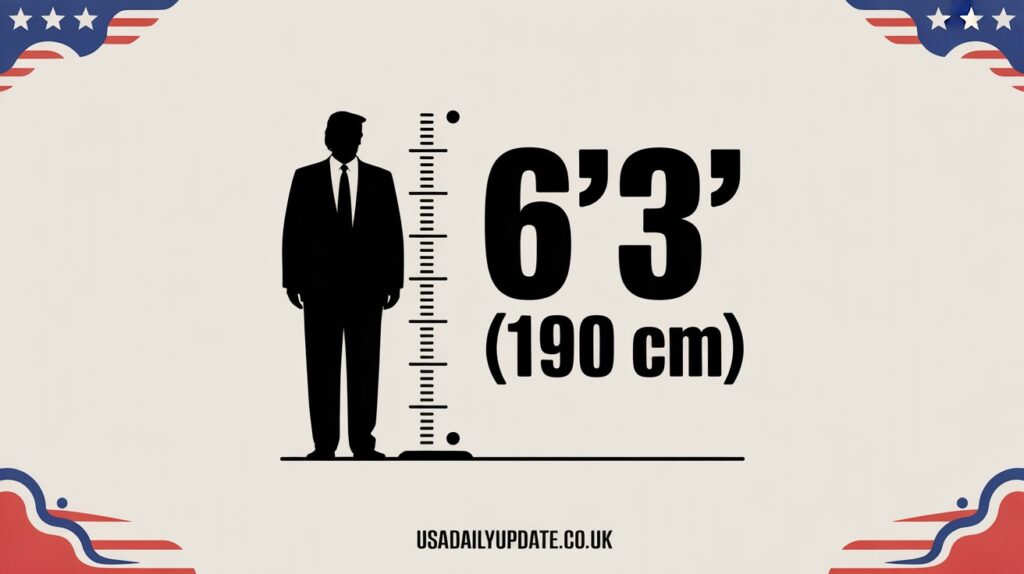
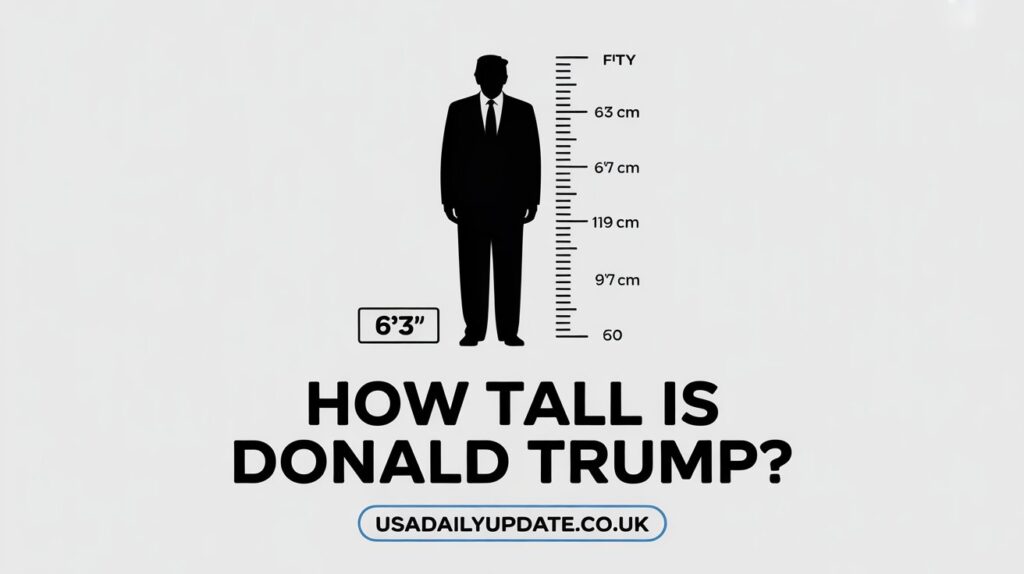
Medical examinations during his presidency provided additional official measurements. In 2018, then White House physician Dr. Ronny Jackson released Trump’s physical examination results. The report stated Trump’s height as 6 feet 3 inches, one inch taller than previous records. This discrepancy immediately sparked questions and became a talking point in media coverage.
A follow up examination in 2019 by Dr. Sean Conley, who succeeded Dr. Jackson, also listed Trump at 6 feet 3 inches. These presidential medical records are considered highly credible since White House physicians follow strict protocols. However, the one inch increase from earlier measurements raised eyebrows among observers who questioned how someone gains height in their seventies.
The shift from 6’2″ to 6’3″ in official records created the foundation for ongoing debates. People wondered whether the earlier measurement was incorrect, if the later ones were inflated, or if measurement methods simply varied. This inconsistency in official documentation keeps the question alive.
Why Trump’s Height Became Controversial
Most people’s heights don’t generate significant public interest or debate. So why has the question of how tall is Donald Trump become such a recurring topic? Several factors transformed a simple measurement into a cultural talking point worth examining closely.
The BMI Factor
One major reason involves Trump’s body mass index classification. During his 2018 physical, Trump weighed 239 pounds. At 6 feet 3 inches, this placed his BMI at 29.9, just under the threshold for obesity, which begins at 30. However, at 6 feet 2 inches with the same weight, his BMI would be 30.7, technically classifying him as obese.
This single inch difference carried medical and political significance. Critics suggested the height might have been adjusted to avoid the obesity classification. The BMI system itself has limitations and critics, but it remains a standard medical metric. The convenient positioning just below the obesity threshold raised suspicions about the measurement’s accuracy.
Visual Comparisons and Photo Analysis
People began comparing Trump’s height to other individuals with known measurements. Photos with Barack Obama, who is listed at 6 feet 1 inch, show Trump appearing similar in height or only slightly taller. Pictures with Jeb Bush, also listed at 6’3″, show them at comparable heights despite Trump claiming to be taller.
The internet age enables frame by frame analysis of photos and videos. Amateur investigators zoomed in on images, adjusted for camera angles, and created detailed comparisons. While photos can be misleading due to posture, footwear, and perspective, the volume of visual evidence provided material for ongoing discussion.
Trump’s Own Statements
Trump himself has made his height a topic of conversation by mentioning it repeatedly. He’s claimed to be 6 feet 3 inches or even 6 feet 2 inches in various interviews over the years. His willingness to discuss his physical attributes, combined with the discrepancies in records, kept the subject in the public eye.
His combative relationship with media also played a role. When outlets questioned his height claims, it became another front in the broader narrative about truth and credibility. What might have been a minor footnote became emblematic of larger debates about factual accuracy.
Comparing Trump’s Height to Other Presidents
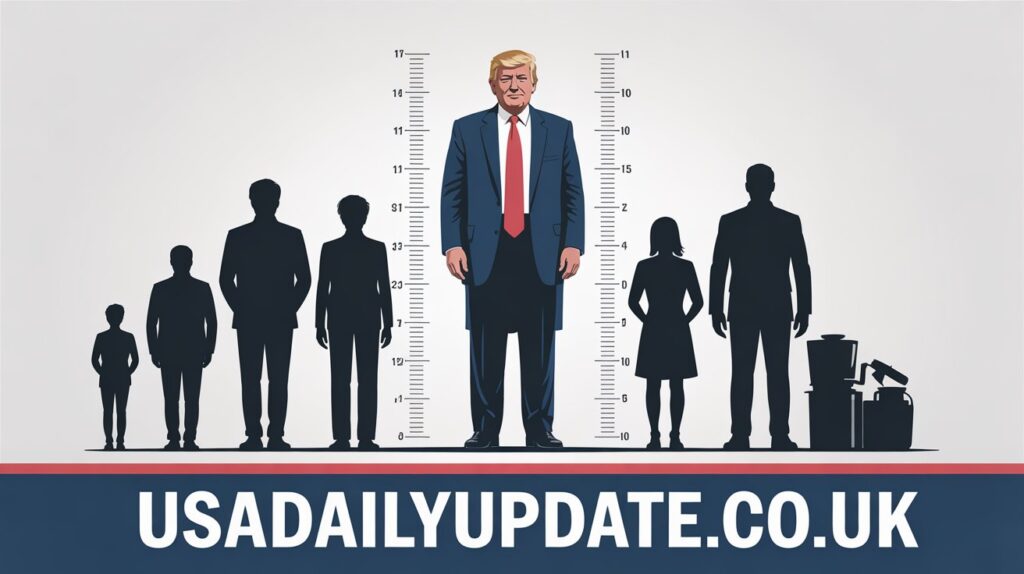
Understanding how tall is Donald Trump gains context when compared to other U.S. presidents. Height in American leadership reveals interesting patterns and helps calibrate whether Trump’s stature is exceptional or typical. The comparison also provides reference points for evaluating the accuracy of his listed height.
Historical Presidential Heights
Abraham Lincoln holds the record as the tallest president at 6 feet 4 inches. Lyndon B. Johnson matched Lincoln’s height, making them the two tallest leaders in American history. If Trump is indeed 6 feet 3 inches, he ranks among the taller presidents but doesn’t break records.
Barack Obama, Trump’s immediate predecessor, stands at 6 feet 1 inch according to medical records. Bill Clinton was also 6’2″, while George H.W. Bush stood at 6’2″. George W. Bush measured 5’11.5″, and Jimmy Carter was 5’9.5″. Recent presidents have generally been above average height for American men.
The average height for adult American males currently sits around 5 feet 9 inches. This means most recent presidents have been significantly taller than the typical American man. Trump would be approximately six inches above average at 6’3″, placing him in roughly the 90th percentile for male height in the United States.
Direct Comparisons in Photos
Photos of Trump with other presidents and world leaders provide comparison opportunities. Standing next to Obama at the 2017 inauguration, Trump appears only marginally taller despite the claimed two inch difference. Some analysts suggest the difference looks closer to one inch or even negligible depending on posture.
Pictures with Canadian Prime Minister Justin Trudeau, listed at 6’2″, show them at very similar heights. Photos with French President Emmanuel Macron, who stands around 5’8″, show the expected significant height difference. These comparisons suggest Trump is certainly tall but may not be quite as tall as the 6’3″ claim.
Vladimir Putin, notably shorter at around 5’7″, appears significantly smaller when photographed with Trump. This dramatic difference is consistent with Trump being in the 6’1″ to 6’3″ range. The various photographic evidence creates a range of plausible heights rather than definitively confirming one specific measurement.
The Science and Challenges of Accurate Height Measurement
Measuring human height seems simple but involves more complexity than most people realize. Understanding these nuances explains why the question of how tall is Donald Trump doesn’t have one universally accepted answer. Multiple factors affect measurements and create legitimate variation in results.
Measurement Techniques and Variations
Professional height measurement uses a stadiometer, a device with a vertical ruler and horizontal headpiece. Proper technique requires standing barefoot with heels together against the wall, looking straight ahead. Even with proper equipment and technique, measurements can vary by up to half an inch depending on time of day and individual factors.
Height fluctuates throughout the day due to spinal compression. People are typically tallest in the morning after lying down all night. By evening, the spine has compressed from gravity and activity, resulting in measurements up to half an inch shorter. The timing of Trump’s physical examinations could account for some variation.
Posture significantly impacts measured height. Standing perfectly straight with good posture versus slightly slouched can create differences of an inch or more. At age 71 during his first presidential physical, natural age related postural changes could affect Trump’s measurement compared to earlier in life.
Age Related Height Loss
Adults typically lose height as they age due to spinal disc compression and postural changes. Men can lose one to two inches between ages 30 and 70. Trump was 71 during his first presidential physical and 73 during the second. The claim that he measured 6’3″ in his seventies after being 6’2″ earlier in life runs counter to typical aging patterns.
This biological reality adds another layer to the controversy. While unusual, it’s not impossible for someone to measure slightly taller later in life due to different measurement techniques or improved posture. However, skeptics point to this abnormality as evidence supporting inflation of the measurement.
The Psychology of Height in Politics and Leadership
The intense interest in how tall is Donald Trump reflects broader societal attitudes about height and leadership. Understanding these psychological factors explains why such measurements matter in politics and public perception. Height carries symbolic weight beyond the physical measurement itself.
The Height Advantage in Elections
Research consistently shows taller candidates perform better in U.S. presidential elections. Since 1900, the taller candidate has won the popular vote in about two thirds of elections. This correlation suggests voters unconsciously associate height with leadership qualities like strength, competence, and authority.
Evolutionary psychology offers explanations for this bias. Throughout human history, physical size correlated with fighting ability and resource acquisition. These primitive associations persist in modern contexts even when physical dominance is irrelevant to leadership effectiveness. Voters may unconsciously favor taller candidates due to these deep seated biases.
Trump stands taller than average regardless of whether he’s 6’2″ or 6’3″. This height advantage may have contributed to his political success. His physical presence in debates and public appearances commands attention partly due to his stature. The consistent emphasis on his height in his own rhetoric suggests awareness of this psychological factor.
Self Presentation and Identity
Trump’s concern with his height reflects broader patterns about self presentation and identity. He’s famously attentive to his image, from his distinctive hairstyle to his clothing choices. Height represents another element of the carefully constructed persona he presents to the world.
The possible exaggeration of his height by an inch would be consistent with minor embellishments many people make about their physical attributes. Such small inflations are common on dating profiles and driver’s licenses. In Trump’s case, his public profile and the scrutiny he invites make these details more significant than for private citizens.
Medical Perspectives on Trump’s Height Claims
Healthcare professionals and medical experts have weighed in on the question of how tall is Donald Trump. Their perspectives provide technical insights into the measurements, methods, and plausibility of the various height claims. Expert analysis helps separate likely scenarios from improbable ones.
Analysis of White House Physical Reports
Medical professionals noted the unusual one inch height increase between Trump’s earlier documented height of 6’2″ and the White House physical listing of 6’3″. Dr. Ronny Jackson’s 2018 report sparked particular skepticism because adults don’t typically gain height in their seventies.
Some physicians suggested the measurement could be accurate if previous records were incorrect or measured casually. Others pointed out that White House physicians face unique pressures and that perfect accuracy isn’t always prioritized for non critical measurements like height. The controversy doesn’t necessarily indicate intentional deception.
Independent medical experts analyzing photos and comparing Trump to individuals with known heights generally estimate his height in the 6’1″ to 6’2″ range. These analyses account for footwear, camera angles, and posture. While not definitive, these expert assessments cluster around measurements slightly lower than the claimed 6’3″.
The Reliability of Self Reported Height
Studies show people commonly overestimate their height by one to two inches. Men tend to round up more than women, and the exaggeration increases for those who are self conscious about height. Trump’s history of hyperbolic statements about various attributes fits this pattern of modest self aggrandizement.
Medical professionals emphasize that one or two inches of discrepancy in height claims isn’t particularly unusual or concerning from a health perspective. The intense focus on Trump’s specific height says more about public interest and political dynamics than medical significance. For most health purposes, whether someone is 6’2″ or 6’3″ makes minimal practical difference.
Cultural Impact and Public Fascination
The question of how tall is Donald Trump transcended simple curiosity to become a cultural phenomenon. Memes, jokes, and serious analyses spread across social media and news outlets. This section explores why this particular detail captured public imagination so thoroughly.
Social Media and Internet Culture
Twitter threads and Reddit forums dedicated extensive discussion to Trump’s height. Users created detailed photo comparisons, mathematical calculations adjusting for shoe lifts and posture, and humorous content about “heightgate.” The topic became a recurring reference point in online political discourse.
Late night comedians incorporated Trump’s height into monologues and sketches. The subject provided material that was simultaneously trivial and symbolically meaningful. Questioning his height served as a proxy for larger debates about honesty and the reliability of official statements from his administration.
The persistence of the topic reflects how modern information culture scrutinizes public figures relentlessly. In earlier eras, a president’s exact height wouldn’t have generated extensive debate. Today’s combination of abundant photographs, digital analysis tools, and platforms for public discourse transforms minor details into sustained conversations.
Symbolic Significance
For critics, Trump’s potentially inflated height claim exemplified a pattern of exaggeration and dishonesty they perceived in his broader conduct. The height question became a microcosm of larger concerns about truthfulness. Even if the actual discrepancy was minor, it represented something symbolically important.
For supporters, the intense focus on Trump’s height seemed like a petty distraction from substantive policy issues. They viewed the controversy as evidence of media bias and an obsessive desire to criticize everything about Trump. The debate itself became polarized along existing political divisions.
What Experts and Measurements Actually Tell Us
Synthesizing all available evidence provides the clearest picture of how tall is Donald Trump. While perfect certainty remains elusive, we can assess the most likely scenario based on multiple data points. This balanced analysis weighs official records against photographic evidence and expert estimates.
The most consistent documentation throughout Trump’s adult life listed him at 6 feet 2 inches. This measurement appears on earlier official documents and represents the most frequently cited height before his presidency. At this height, Trump would still be notably tall compared to average American men.
The White House physical examinations listing 6’3″ represent the highest official claims about his height. These measurements carry medical authority, though the unusual increase sparked legitimate questions. If accurate, measurement technique differences or Trump achieving unusually perfect posture during the exam could explain the increase.
Photographic comparisons and expert visual analyses most commonly estimate Trump’s height between 6’1″ and 6’2″. These assessments account for various factors like footwear and posture. The clustering of independent estimates in this range suggests this may be the most accurate measurement.
The most reasonable conclusion based on all evidence is that Trump likely stands between 6’1″ and 6’2″, with 6’2″ being the most probable height. He may have been measured at 6’3″ under ideal conditions with perfect posture, or that measurement may represent a slight overstatement. Regardless of the exact figure, he remains taller than most American men.
The one to two inch uncertainty in Trump’s height may seem significant in this debate but actually falls within normal variation for height measurements. The intense scrutiny reflects his public profile rather than unusual discrepancy. Most people’s heights would show similar variation if subjected to the same level of analysis.
Why Accuracy Matters and Why It Doesn’t
The extensive discussion about how tall is Donald Trump raises questions about why such details matter. The topic sits at an interesting intersection of trivial personal facts and meaningful questions about truth and accountability. Both perspectives have validity worth considering.
Arguments for Why It Matters
Accuracy in official records matters even for seemingly minor details. When government physicians release medical information to the public, that information should be reliable. Questions about height accuracy extend to concerns about the reliability of other medical claims about weight, cholesterol, and overall health.
The height claim connects to larger patterns of behavior and truthfulness. If Trump or his physicians inflated his height by an inch to avoid an obesity classification, it suggests prioritizing image over accuracy. This pattern would be relevant to public trust and credibility on more consequential matters.
Height affects how people perceive leaders and may influence election outcomes. If candidates exaggerate height to gain psychological advantages with voters, that represents a form of manipulation. Holding public figures accountable for accurate self representation serves democratic interests.
Arguments for Why It Doesn’t Matter
Conversely, obsessing over one or two inches of height seems petty compared to substantive policy issues. The extensive attention given to this detail might distract from more important questions about governance, legislation, and leadership decisions. Prioritizing this topic could represent misplaced media and public focus.
Small exaggerations about physical attributes are nearly universal in society. Few people would survive similar scrutiny of their claimed height, weight, or age without some discrepancies emerging. Applying extraordinary standards to Trump that aren’t applied to others might be unfair.
From a practical standpoint, whether Trump is 6’1″, 6’2″, or 6’3″ has zero impact on his ability to perform presidential duties. The measurement doesn’t affect policy competence, decision making ability, or leadership effectiveness. Resources spent debating his height might be better invested in analyzing consequential issues.
Conclusion
The question of how tall is Donald Trump demonstrates how even simple facts can become contested in the modern information environment. Official records list him between 6’2″ and 6’3″, photographic analysis suggests 6’1″ to 6’2″, and the truth likely falls somewhere in that range. While the exact measurement remains debated, Trump is certainly taller than average for American men.
This seemingly trivial question touches on important themes about truthfulness, self presentation, and the nature of information in the digital age. The intense interest reflects Trump’s polarizing public profile and the broader skepticism surrounding his statements. Whether the height debate matters depends on your perspective about what deserves public attention and scrutiny.
Understanding how tall is Donald Trump requires navigating official documents, visual evidence, medical analysis, and cultural context. The most evidence based conclusion places him at approximately 6’1″ to 6’2″, though claims of 6’3″ exist in presidential medical records. The one to two inch uncertainty may seem small but became significant due to his prominent public role.
What’s your take on the height debate? Does questioning these details serve important accountability purposes, or does it represent a distraction from more meaningful issues? The answer probably depends on your broader views about truth telling, media scrutiny, and what standards we should apply to public figures.
Frequently Asked Questions
How tall is Donald Trump officially?
Donald Trump’s most recent official White House medical records from 2018 and 2019 list his height as 6 feet 3 inches. Earlier documentation, including his driver’s license, reportedly listed him at 6 feet 2 inches. This one inch discrepancy has generated debate, with independent visual analyses often estimating his height between 6’1″ and 6’2″. The most commonly accepted range is 6’1″ to 6’3″.
Did Trump’s height change between measurements?
Trump’s documented height increased from 6’2″ on earlier records to 6’3″ in his presidential physical examinations. Adults typically don’t gain height in their seventies, making this increase unusual. The difference could result from measurement technique variations, different posture, or time of day differences. Some critics suggested the measurement was adjusted to keep his BMI below the obesity threshold.
How does Trump’s height compare to Obama?
Barack Obama’s official height is 6 feet 1 inch according to medical records. Trump claims to be 6’3″, which would make him two inches taller. However, photographs of them together show Trump appearing only marginally taller or roughly the same height. This visual evidence suggests the actual height difference may be smaller than the claimed two inches.
Why does Trump’s height matter?
Trump’s height matters for several reasons including its effect on his BMI classification and broader questions about accuracy in official records. Height influences public perception of leaders and may affect electoral success. The debate also reflects larger discussions about truthfulness and credibility. However, critics argue the focus on this detail distracts from more substantive policy issues.
Is 6’3″ tall for a president?
Yes, 6’3″ would make Trump among the taller U.S. presidents but not the tallest. Abraham Lincoln and Lyndon Johnson both stood 6’4″, making them the tallest presidents in history. At 6’3″, Trump would tie with several other presidents. The average American male is 5’9″, making any measurement in the 6’1″ to 6’3″ range significantly above average.
Can height measurements vary by an inch?
Yes, height measurements can legitimately vary by up to an inch based on time of day, posture, measurement technique, and equipment used. People are typically tallest in the morning and can be half an inch to an inch shorter by evening due to spinal compression. Measurement technique and posture differences can account for additional variation, making some discrepancy normal.
What do photos reveal about Trump’s real height?
Photographic comparisons of Trump with people of known heights suggest he likely stands between 6’1″ and 6’2″. Images with Barack Obama (6’1″), Jeb Bush (6’3″), and other figures provide reference points. While photos can be misleading due to angles and footwear, the volume of visual evidence creates a relatively consistent estimate slightly below the claimed 6’3″.
Has Trump commented on his height?
Yes, Trump has mentioned his height in various interviews and public statements over the years. He’s claimed to be both 6’2″ and 6’3″ at different times. His willingness to discuss his physical attributes, combined with the documented discrepancies, contributed to the ongoing public interest in this topic. His emphasis on his size fits his broader self presentation style.
Do presidents lie about their height?
Small exaggerations of height are common in society generally, not unique to presidents. Studies show people frequently overestimate their height by one to two inches, with men more likely to round up than women. Whether intentional or not, minor height discrepancies appear in many public figures’ documentation. The scrutiny applied to Trump exceeds what most presidents faced historically.
What is the most accurate estimate of Trump’s height?
Based on synthesizing official records, photographic evidence, and expert analysis, the most likely accurate height for Donald Trump is approximately 6’1″ to 6’2″, with 6’2″ being the most probable. While White House physicals listed 6’3″, earlier documentation and visual comparisons support a measurement in the lower range. The one to two inch variation falls within normal measurement uncertainty.
Also read Usadailyupdate.co.uk