Introduction
The moment Aidan Hutchinson went down during the Detroit Lions’ game against the Dallas Cowboys in October 2024, every football fan watching knew something was terribly wrong. The Detroit defensive end, who had been having a career year and leading the NFL in sacks, suffered one of the most gruesome injuries seen on an NFL field. The Aidan Hutchinson injury not only devastated Lions fans but sent shockwaves throughout the entire league.
Hutchinson had been playing at an elite level, putting together a performance that had him in serious MVP consideration. His relentless pass rush and defensive dominance were key factors in Detroit’s success. Then, in a split second, everything changed. The injury was so severe that even hardened football veterans turned away from their screens.
In this comprehensive article, you’ll learn everything about the Aidan Hutchinson injury, from what exactly happened on that fateful play to the medical details of his condition. We’ll explore his recovery timeline, what this means for the Lions’ playoff hopes, and the inspiring comeback journey ahead. You’ll also discover how similar injuries have been handled in the NFL, expert opinions on his prognosis, and why this situation has become one of the most talked about stories of the season.
What Happened: The Injury Play Breakdown
The Aidan Hutchinson injury occurred during the Lions’ Week 6 matchup against the Dallas Cowboys on October 13, 2024. Detroit was dominating the game when Hutchinson rushed the quarterback with his signature intensity. As he pursued Cowboys quarterback, he collided with teammate Alim McNeill while attempting to make a sack.
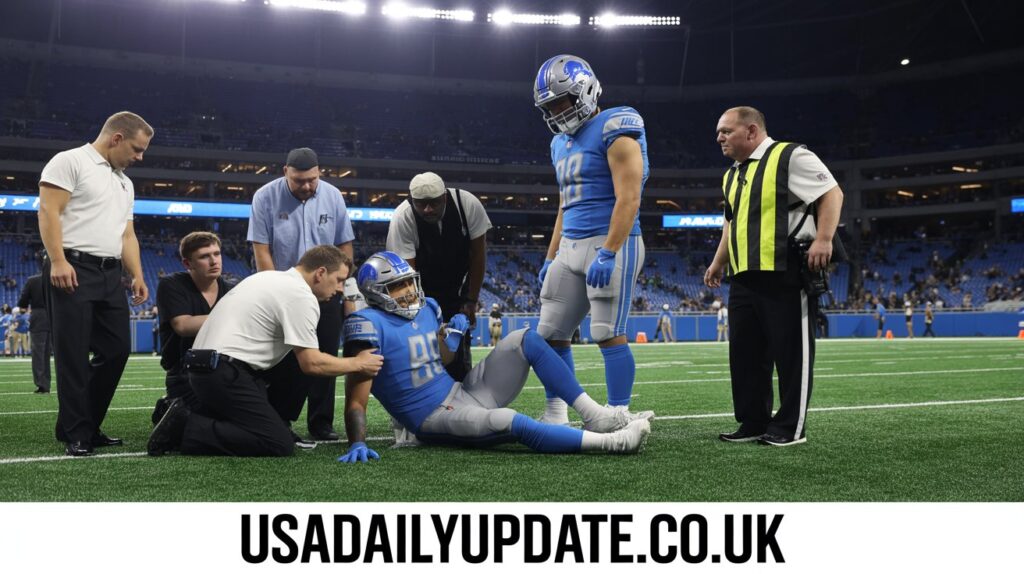
The collision resulted in Hutchinson’s left leg bending in an unnatural way that was immediately apparent to everyone watching. Medical personnel rushed onto the field as players from both teams took a knee. The severity was obvious from the reactions of those closest to the play. Even broadcast commentators struggled to maintain their composure while describing the scene.
Hutchinson remained on the ground for several minutes as trainers attended to him. An air cast was applied to his leg before he was carefully placed on a cart. The stadium fell silent except for supportive cheers as he was transported off the field. His teammates looked visibly shaken, with some appearing emotional as they watched their defensive leader leave.
The play occurred in the third quarter with Detroit leading comfortably. What should have been a moment of defensive dominance turned into one of the season’s most heartbreaking moments. The injury’s severity meant Hutchinson’s remarkable season was suddenly and dramatically cut short.
Medical Details of the Injury
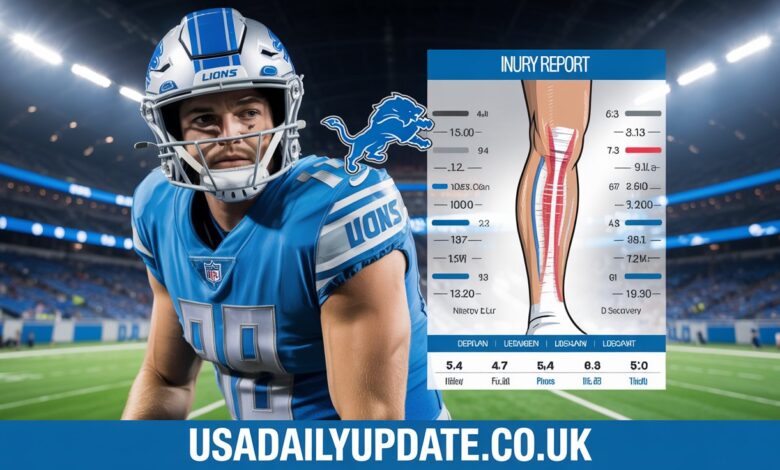
The Aidan Hutchinson injury was diagnosed as a fractured tibia and fibula in his left leg. This type of break involves both major bones in the lower leg and is considered one of the most serious non life threatening injuries in football. The fracture was severe enough to require immediate surgical intervention.
Hutchinson underwent surgery at a local Dallas hospital shortly after the injury. The procedure involved inserting a rod to stabilize the broken bones and ensure proper healing alignment. This type of surgery is standard for tibia fractures but requires precision to maintain proper leg function. The medical team worked to ensure the bones would heal correctly for future athletic performance.
The surgery was reported as successful, with doctors expressing cautious optimism about his recovery prospects. However, the timeline for return remained uncertain given the injury’s severity. Tibia fractures typically require four to six months of healing before any athletic activity can resume. Additional time is needed for rehabilitation and conditioning.
Complications with this type of injury can include infection, improper bone healing, and reduced mobility. However, modern surgical techniques and NFL level medical care significantly improve outcomes. The bone must heal completely before any stress can be placed on it. Physical therapy becomes crucial once initial healing occurs to restore strength and range of motion.

Immediate Impact on the Detroit Lions
The loss of Aidan Hutchinson represented a devastating blow to Detroit’s defensive plans. He had recorded 7.5 sacks in just five games, putting him on pace for a potential 20 sack season. His absence left a massive void in the Lions’ pass rush that would be nearly impossible to replace. No single player could replicate his production and impact.
Detroit’s defense had been performing better than expected largely due to Hutchinson’s dominance. Offensive coordinators had to game plan specifically around him, which freed up other defenders. His injury meant opposing quarterbacks would face less pressure and have more time to dissect the secondary. The ripple effects extended beyond just sack numbers.
The Lions made immediate roster adjustments following the injury. They explored trade options before the deadline to add pass rushing depth. Internal options included increasing snaps for backup defensive ends and adjusting defensive schemes. However, none of these solutions could truly replace what Hutchinson brought to the field.
Team morale took a hit as players processed losing their defensive leader and one of the team’s emotional cornerstones. Hutchinson’s energy and production had been infectious throughout the locker room. His teammates vowed to rally and play harder in his honor. The challenge was converting that emotional response into sustained defensive performance.
Recovery Timeline and Return Expectations
The initial recovery timeline for the Aidan Hutchinson injury placed his potential return at four to six months minimum. This timeline covered just the bone healing phase before rehabilitation could even begin. Doctors emphasized that rushing recovery would risk reinjury or complications that could end his career. Patience was essential despite everyone’s desire to see him back.
The first phase involved protecting the leg and allowing the bones to heal naturally. Hutchinson would need to remain non weight bearing on the injured leg for several weeks. Regular imaging would track healing progress and identify any complications early. This phase was mentally challenging as he couldn’t begin actual rehabilitation.
Once the bone showed sufficient healing, physical therapy would begin gradually. Initial exercises would focus on restoring range of motion and preventing muscle atrophy. Strength training would intensify as healing continued, with careful monitoring at each stage. The goal was rebuilding the leg to handle the explosive movements required in professional football.
Most realistic projections suggested Hutchinson would miss the remainder of the 2024 season, including playoffs. An optimistic scenario might see him ready for the 2025 training camp. However, even that timeline required everything going perfectly with no setbacks. The Lions and Hutchinson’s team emphasized taking whatever time necessary for complete recovery.
Comparing to Similar NFL Injuries
The Aidan Hutchinson injury shares similarities with other severe leg fractures in NFL history. Joe Theismann’s career ending leg injury in 1985 remains the most famous, though medical advances have improved outcomes significantly. More recently, players like Ryan Shazier and Alex Smith suffered devastating leg injuries but had vastly different recovery stories.
Alex Smith’s leg injury in 2018 provides perhaps the most relevant comparison. He suffered a compound tibia and fibula fracture that nearly cost him his leg. His recovery took nearly two years and included multiple surgeries to address complications. Remarkably, he returned to play in 2020, winning NFL Comeback Player of the Year. His story offers hope while illustrating recovery’s challenges.
Not all comparisons are encouraging. Some players never regain their pre injury form after severe leg fractures. The psychological impact of fearing reinjury can affect performance even after physical healing. Speed and explosiveness, crucial for pass rushers, can diminish following such injuries. Each recovery is unique and depends on countless variables.
Modern sports medicine has improved recovery outcomes dramatically. Better surgical techniques, enhanced rehabilitation protocols, and advanced monitoring help athletes return stronger. The resources available to NFL players far exceed what typical patients receive. However, the physical demands of professional football also exceed normal activity significantly. Hutchinson’s youth and elite physical condition work in his favor for a full recovery.
Hutchinson’s Response and Mental Approach
Aidan Hutchinson’s initial response to his injury demonstrated remarkable mental strength and positivity. He posted on social media thanking fans for their support and expressing determination to come back stronger. His messages showed someone processing the devastating news while maintaining an optimistic outlook. This mental approach would prove crucial for the long recovery ahead.
Hutchinson remained engaged with the team despite being unable to play. He attended meetings virtually when possible and stayed in communication with coaches and teammates. His presence, even remotely, provided continuity and kept him connected to the season. This involvement helped him mentally while supporting his teammates from afar.
The mental challenges of such an injury extend beyond the initial shock. Long months of rehabilitation test patience and resolve when progress seems slow. Many athletes struggle with identity issues when their physical abilities are temporarily removed. Sports psychologists often work with injured players to maintain mental health throughout recovery.
Hutchinson’s personality and work ethic suggested he would attack rehabilitation with the same intensity he brought to football. His competitive nature could be channeled into recovery goals and milestones. Support from family, teammates, and the organization would provide essential encouragement during difficult moments. The mental battle would be as important as the physical healing.
Team and League Reactions
The NFL community rallied around Aidan Hutchinson following his injury. Players from across the league sent messages of support and encouragement. The reaction demonstrated the respect Hutchinson had earned from opponents and peers. Even rivals acknowledged the loss his injury represented to football as a whole.
Detroit Lions head coach Dan Campbell addressed the injury emotionally in his post game press conference. He praised Hutchinson’s toughness and character while acknowledging the challenge ahead. Campbell’s visible emotion reflected how important Hutchinson was beyond just his on field contributions. The coach pledged the team would honor Hutchinson by continuing to compete at the highest level.
Teammates shared their own reactions through social media and interviews. Many described Hutchinson as a leader and friend whose absence would be felt in every aspect. Several players dedicated their subsequent performances to him. The locker room united around the goal of succeeding despite the adversity.
Fans organized social media campaigns showing support for Hutchinson’s recovery. The outpouring demonstrated his popularity and the connection he’d built with Detroit’s passionate fanbase. Jersey sales remained strong as fans wore his number in solidarity. The community aspect of his recovery provided motivation and reminded him he wasn’t alone in this journey.
Impact on His Career Trajectory
Before the Aidan Hutchinson injury, he was establishing himself as one of the NFL’s elite defensive players. His performance through five games had him in early Defensive Player of the Year discussions. The trajectory suggested multiple Pro Bowl selections and potentially a Hall of Fame career. The injury represented a significant interruption to that path.
The immediate concern involved whether he could return to his pre injury level. History shows mixed results for pass rushers recovering from serious leg injuries. The explosive first step and flexibility required for elite edge rushing can be affected. If Hutchinson returns at even 90 percent of his previous ability, he’ll remain a very good player. The question is whether he can return to elite status.
Contract implications also entered the conversation. Hutchinson was playing on his rookie deal with a fifth year option decision looming. The injury complicated those calculations for both player and team. Detroit would need to evaluate his recovery progress before committing to the option. Hutchinson would need to prove his health before seeking a long term extension.
Long term, many players do successfully return from similar injuries and resume productive careers. The key factors include complete healing, thorough rehabilitation, and mental confidence. Hutchinson’s age (24 at the time of injury) works in his favor as younger bodies typically heal better. The support system and medical resources available give him the best possible chance for full recovery.
Lions’ Defensive Adjustments Without Hutchinson
Detroit’s defensive coordinator had to completely reimagine his schemes without Aidan Hutchinson. The game plans that relied on Hutchinson occupying multiple blockers needed revision. Other players would need to step up, but replicating his production was unrealistic. The approach shifted toward collective improvement rather than individual replacement.
The Lions increased snaps for backup pass rushers and rotated players more frequently to keep them fresh. Scheme adjustments included more blitzes to generate pressure that Hutchinson previously created naturally. Creative playcalling attempted to confuse offensive lines that no longer had to worry about Detroit’s best rusher. These adjustments showed some success but couldn’t fully compensate for the loss.
The secondary faced increased pressure without Hutchinson’s consistent pass rush. Quarterbacks had more time to find open receivers, testing coverage abilities. Detroit’s corners and safeties needed to hold coverage longer on every play. This challenge exposed some depth issues in the defensive backfield.
Younger players received opportunities they wouldn’t have gotten with Hutchinson healthy. This created long term development opportunities despite the short term pain. Some players rose to the challenge and showed promise for the future. The adversity forced growth that might benefit the team in subsequent seasons.
Expert Medical Opinions on Recovery
Sports medicine specialists who reviewed the Aidan Hutchinson injury offered cautiously optimistic assessments. The type of fracture, while serious, is well understood and treatable with modern techniques. The surgical rod placement provides stability that allows proper healing. The key is avoiding complications and following the recovery protocol precisely.
Orthopedic surgeons emphasized that the timeline couldn’t be rushed regardless of Hutchinson’s importance to the team. Bone healing follows biological processes that can’t be accelerated safely. Attempting to return too quickly risks incomplete healing, reinjury, or chronic problems. The medical team would base clearance on objective measures, not external pressure.
Physical therapists outlined the rehabilitation phases Hutchinson would need to complete. Early exercises focus on maintaining range of motion and preventing muscle loss. Progressive strengthening follows once healing permits. Sport specific training represents the final phase, preparing for football’s unique demands. Each phase builds on the previous one and can’t be skipped.
Sports psychologists noted the mental health aspect of recovery from such visible injuries. The public nature of NFL injuries adds pressure beyond what typical patients experience. Support systems and mental health resources become as important as physical therapy. Successfully navigating the psychological challenges influences overall recovery outcomes significantly.
What This Means for Lions’ Playoff Hopes
The Aidan Hutchinson injury fundamentally altered Detroit’s Super Bowl aspirations for the 2024 season. Before the injury, the Lions were legitimate championship contenders with one of the league’s best rosters. Hutchinson’s loss weakened their strongest defensive unit. Playoff success often requires dominant defensive plays, which became harder to generate without him.
The team’s response to this adversity would define their season. Great teams overcome injuries through depth and scheme adjustments. Detroit’s coaching staff needed to maximize the talent remaining on the roster. The offense would need to shoulder more of the scoring burden to compensate for defensive limitations.

Statistical analysis suggested the Lions’ win probability decreased significantly without Hutchinson. However, sports aren’t played on paper and intangibles matter. The emotional rallying point of playing for an injured teammate sometimes elevates team performance. Whether Detroit could channel grief into motivation remained to be seen.
The playoff picture would likely require the Lions to outscore opponents rather than dominate defensively. This high scoring approach was risky against elite teams with good defenses. However, Detroit’s offensive weapons gave them a chance in any game. The path to a championship became much harder but not impossible without their defensive star.
Conclusion
The Aidan Hutchinson injury stands as one of the most impactful and heartbreaking moments of the 2024 NFL season. His fractured tibia and fibula not only ended his dominant campaign but also altered the Detroit Lions’ championship trajectory. The gruesome nature of the injury shocked everyone who witnessed it, while his positive response demonstrated remarkable character and mental fortitude.
Understanding the Aidan Hutchinson injury requires appreciating both its immediate impact and long term implications. The medical details reveal a serious but treatable condition with a recovery timeline extending well into 2025. His potential return remains promising thanks to his youth, work ethic, and access to elite medical care. However, the journey back to elite performance will test him physically and mentally.
For the Lions, adapting to life without their defensive star became an unexpected challenge in what was shaping up as a special season. The team’s ability to rally and compete without Hutchinson would define their 2024 campaign. His eventual return could provide a massive boost for future seasons if recovery goes as planned.
The story of the Aidan Hutchinson injury ultimately remains unfinished. The coming months will reveal how his recovery progresses and whether he can return to his pre injury form. Football fans everywhere hope to see him back on the field, rushing quarterbacks with the same passion and skill that made him special. What aspect of his recovery are you most interested in following? Share your thoughts and support for Hutchinson’s comeback journey.
Frequently Asked Questions
What injury did Aidan Hutchinson suffer?
Aidan Hutchinson suffered a fractured tibia and fibula in his left leg during a game against the Dallas Cowboys on October 13, 2024. The injury involved both major bones in his lower leg breaking after a collision with a teammate while rushing the quarterback. He immediately underwent surgery to insert a stabilizing rod and begin the healing process.
How long will Aidan Hutchinson be out?
The Aidan Hutchinson injury recovery timeline is estimated at four to six months minimum for bone healing alone. This means he will miss the remainder of the 2024 NFL season including any playoff games. Most realistic projections suggest he could potentially return for the 2025 training camp if recovery proceeds without complications.
Will Aidan Hutchinson play again?
Medical experts are cautiously optimistic that Aidan Hutchinson will play football again. The type of fracture he suffered, while serious, is treatable with modern surgical techniques. His age, physical condition, and access to elite medical care all favor a successful recovery. However, returning to his pre injury elite level remains uncertain until rehabilitation is complete.
How did Aidan Hutchinson get injured?
The Aidan Hutchinson injury occurred when he collided with teammate Alim McNeill while both were pursuing the Cowboys quarterback. The collision caused his left leg to bend unnaturally, resulting in fractures to both his tibia and fibula. The injury happened in the third quarter of Detroit’s Week 6 game against Dallas.
Has any NFL player recovered from a similar injury?
Yes, several NFL players have recovered from similar leg fractures. Alex Smith’s compound tibia and fibula fracture in 2018 is perhaps the most notable recent example. He returned to play in 2020 and won Comeback Player of the Year. However, recovery outcomes vary, and not all players return to their previous performance level.
What does this mean for the Lions’ defense?
The Aidan Hutchinson injury significantly weakened Detroit’s pass rush and overall defensive performance. He had 7.5 sacks in just five games and was on pace for a historic season. The Lions have adjusted schemes and increased opportunities for backup pass rushers, but no single player can replicate his production and impact.
When did Aidan Hutchinson get injured?
Aidan Hutchinson got injured on October 13, 2024, during Week 6 of the NFL season. The injury occurred in the third quarter of Detroit’s game against the Dallas Cowboys at AT&T Stadium. He was immediately transported off the field by cart and underwent surgery later that day at a local Dallas hospital.
What surgery did Aidan Hutchinson have?
Aidan Hutchinson underwent surgery to repair his fractured tibia and fibula. The procedure involved inserting an intramedullary rod into his leg bones to stabilize them and promote proper healing. This type of surgery is standard for severe leg fractures and provides the structural support needed for bones to heal in correct alignment.
How many sacks did Hutchinson have before injury?
Before the Aidan Hutchinson injury, he had recorded 7.5 sacks in just five games during the 2024 season. This pace would have projected to potentially 25 sacks over a full season. He was leading the NFL in sacks at the time of his injury and was in early discussions for Defensive Player of the Year.
Can the Lions still make the playoffs without Hutchinson?
Yes, the Detroit Lions can still make the playoffs without Aidan Hutchinson, though their path became more difficult. The team’s strong offense and remaining defensive talent give them playoff potential. However, their Super Bowl aspirations took a significant hit without their best defensive player. Success will depend on other players stepping up and the team’s ability to overcome this adversity.
Also Read Jeremy Clarkson Net Worth: Shocking Wealth Revealed 2025