Introduction
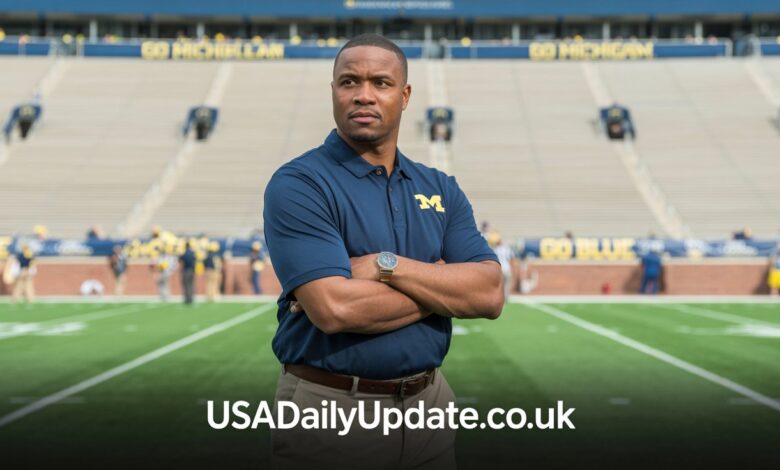
When Michigan announced Sherrone Moore as their head football coach, it marked a historic moment for the program. The Wolverines weren’t just promoting from within. They were elevating a coach who had already proven himself as an integral part of their recent success. Moore’s journey from offensive line coach to head coach represents a compelling story of dedication, skill, and unwavering commitment.
Sherrone Moore isn’t your typical coaching hire. He’s a Michigan man through and through, having played for the Wolverines before returning to coach. His rise through the coaching ranks has been meteoric yet earned. Every step of his career prepared him for this moment. From developing offensive linemen to calling plays as offensive coordinator, Moore has demonstrated versatility few coaches possess.
In this comprehensive guide, you’ll discover everything about Sherrone Moore’s background, coaching philosophy, achievements, and what makes him special. We’ll explore his playing days, coaching journey, the 2023 season where he stepped up as acting head coach, and his vision for Michigan football’s future. Whether you’re a die-hard Wolverines fan or simply interested in college football coaching, understanding Moore’s story provides insight into modern college football success.
Sherrone Moore’s Early Life and Playing Career
Before becoming a coach, Sherrone Moore was a player who understood the game from the trenches. Born on March 13, 1986, in Owasso, Oklahoma, Moore grew up with football in his blood. His path to Michigan began in the heartland of America, where he developed the work ethic that would define his career.
Moore played college football at the University of Louisville from 2005 to 2008. As an offensive lineman, he learned the technical precision and mental toughness required for the position. Offensive line play teaches patience, technique, and selflessness. These qualities would later define his coaching approach.
His playing experience wasn’t at Michigan, which makes his connection to the program even more interesting. Moore didn’t grow up dreaming of coaching the Wolverines. Instead, his relationship with Michigan developed through his coaching journey. This outside perspective combined with deep program knowledge gives him a unique advantage.
After his playing days ended, Moore faced the question many former players confront: what’s next? Coaching seemed like a natural fit. He understood the game deeply and could communicate complex concepts clearly. These skills would prove invaluable as he began his coaching career.
The Coaching Journey Before Michigan
Sherrone Moore‘s path to Ann Arbor included stops that shaped his coaching philosophy. Every position taught him something different about building successful programs and developing players. His journey shows the importance of diverse experiences in coaching development.
University of Louisville (2010-2013) Moore began his coaching career at his alma mater as a graduate assistant. Starting at the bottom is common for coaches, and Moore embraced the opportunity. He worked with the offensive line, learning the fundamentals of teaching technique and building relationships with players.
These early years established Moore’s reputation as a detailed technician. Offensive line coaching requires meticulous attention to footwork, hand placement, and leverage. Moore developed expertise in these areas that would become his calling card.
University of Central Michigan (2014-2015) His next stop brought him to Central Michigan as offensive line coach. This was his first full-time position, representing a significant career step. He continued refining his teaching methods while taking on more responsibility.
At Central Michigan, Moore showed he could develop players at the MAC level. College football’s mid-major conferences require coaches to maximize talent and develop overlooked recruits. Moore proved capable of both.
University of Louisville Return (2016) Moore returned to Louisville for one season, bringing enhanced experience and knowledge. This homecoming allowed him to apply what he’d learned elsewhere. The move also showed his loyalty and appreciation for the program that gave him his start.
Western Michigan University (2017-2018) Moore spent two seasons at Western Michigan as offensive line coach and run game coordinator. The coordinator title indicated growing trust in his strategic thinking. He wasn’t just teaching technique anymore; he was helping design offensive schemes.
University of Cincinnati (2019-2020) His final stop before Michigan brought him to Cincinnati, where he served as offensive line coach and running game coordinator. The Bearcats were building something special, and Moore contributed to their rise. His offensive lines helped create dominant running games that powered Cincinnati’s success.
This diverse background exposed Moore to different coaching philosophies, offensive systems, and program cultures. Each stop added tools to his coaching toolbox. By the time Michigan called, he was ready.
Joining Michigan and Early Success
Sherrone Moore arrived at Michigan in 2021 as offensive line coach and running game coordinator. Head coach Jim Harbaugh recognized Moore’s potential and brought him into a program ready to compete for championships. The timing couldn’t have been better for both parties.
Moore inherited an offensive line that needed development. Michigan’s running game had been inconsistent, and the line struggled with physicality. He immediately implemented his teaching methods, emphasizing technique and toughness. The transformation was remarkable.
The 2021 season showed Moore’s impact immediately. Michigan’s offensive line dominated opponents, opening massive holes for running backs. The Wolverines rushed for over 2,600 yards that season. They physically imposed their will on opponents, particularly against rivals like Ohio State and in the Big Ten Championship game.
Hassan Haskins rushed for 270 yards against Ohio State that season, a performance made possible by dominant line play. Moore’s unit controlled the line of scrimmage against a top-five opponent. That game announced Michigan’s return to elite status and showcased Moore’s coaching ability.
The 2021 College Football Playoff appearance validated the offensive transformation. While Michigan lost to Georgia in the semifinal, they had established an identity. Physical, run-first football built on offensive line excellence became the Michigan trademark under Moore’s influence.

Promotion to Offensive Coordinator
Following the 2021 success, Sherrone Moore earned promotion to offensive coordinator while maintaining his offensive line duties. This dual role demonstrated the trust Harbaugh placed in him. Moore was now responsible for the entire offensive game plan, not just line play and the running game.
The 2022 season brought new challenges and continued success. Michigan won the Big Ten again and returned to the College Football Playoff. Moore’s offense balanced a powerful running game with efficient passing. The versatility kept defenses off balance.
Blake Corum emerged as one of the nation’s best running backs under Moore’s offensive coordination. The offensive line continued dominating, and the scheme maximized talent. Moore showed he could think beyond just running the ball. His play-calling included creative wrinkles that exploited defensive weaknesses.
Michigan’s offense ranked among the nation’s best in multiple categories. They controlled time of possession, converted third downs efficiently, and scored in the red zone. These statistics reflect smart play-calling and excellent execution, both Moore’s responsibilities.
The promotion also gave Moore more visibility nationally. Other programs noticed his work. His name appeared on lists for coordinator openings elsewhere. But Moore remained committed to Michigan, a decision that would soon be rewarded.
The 2023 Season and Acting Head Coach Role
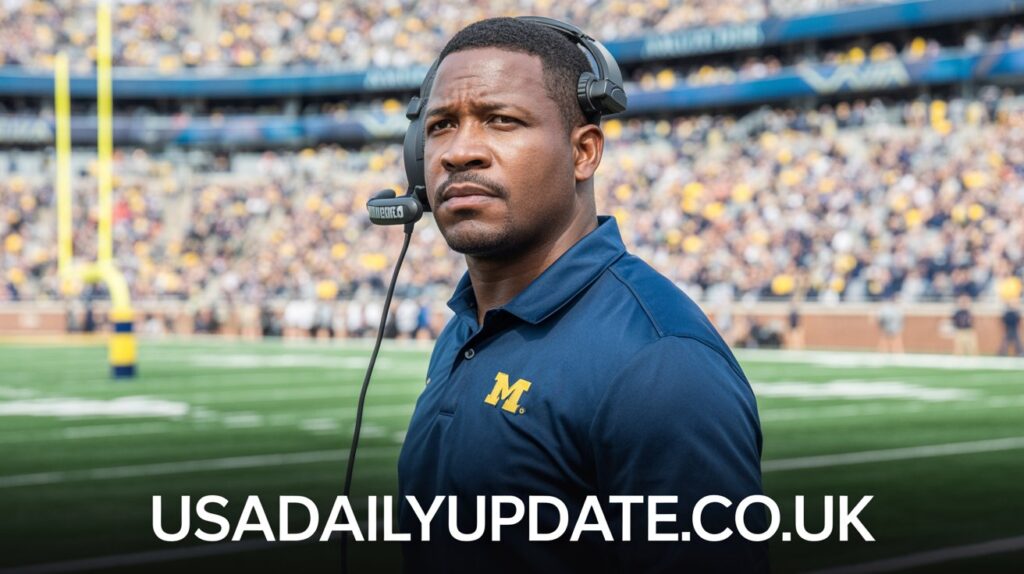
The 2023 season tested Sherrone Moore in ways no one anticipated. Due to university suspension stemming from an NCAA investigation, Jim Harbaugh missed the final three regular-season games. Moore stepped in as acting head coach during this critical period. The situation could have derailed Michigan’s season. Instead, Moore led the team to three dominant victories.
Week 11: Penn State Moore’s first game as acting head coach came against Penn State in a crucial Big Ten matchup. The pressure was immense. A loss would have damaged Michigan’s playoff hopes and raised questions about Moore’s readiness. Instead, Michigan dominated 24-15, controlling the game with Moore’s signature physical football.
The game plan reflected Moore’s strengths. Michigan ran the ball effectively, controlled the clock, and played tough defense. Moore kept things simple, relying on execution rather than trickery. His calm demeanor impressed everyone watching.
Week 12: Maryland The following week brought Maryland to Ann Arbor. Moore again guided Michigan to victory, this time 31-24. The Terrapins presented different challenges than Penn State, testing Moore’s adaptability. He adjusted the game plan appropriately, showing flexibility.
Maryland’s offense featured more tempo and passing than Penn State. Moore’s preparation had the defense ready. Offensively, Michigan mixed runs and passes effectively, keeping Maryland’s defense honest. The win kept Michigan’s perfect season alive.
Week 13: Ohio State The biggest test came in the rivalry game against Ohio State. The Buckeyes represented the only thing standing between Michigan and an undefeated regular season. The stakes couldn’t have been higher. Moore faced intense scrutiny and enormous pressure.
Michigan’s 30-24 victory was a masterpiece. The Wolverines battled back from deficits multiple times, showing resilience that reflected their coach’s composure. Moore made crucial decisions throughout the game, including key play calls in critical moments. The win secured Michigan’s third straight victory over Ohio State, a feat not accomplished since the 1990s.
These three games proved Moore could handle the head coaching role. He went 3-0 against quality opponents in high-pressure situations. His calm leadership and strategic acumen shined through. Michigan’s players rallied around him, playing inspired football.
Offensive Philosophy and Coaching Style
Understanding Sherrone Moore’s coaching philosophy helps explain Michigan’s success. His approach blends old-school physicality with modern strategic thinking. The combination creates offenses that are both powerful and sophisticated.
Physical Football First Moore believes in establishing dominance at the line of scrimmage. This starts with offensive line play but extends to the entire offense. He wants running backs who run through contact, receivers who block downfield, and tight ends who embrace physicality.
This philosophy isn’t just about toughness for its own sake. Physical football controls games. It wears down defenses, controls time of possession, and travels well in bad weather. Moore understands these advantages and builds his offense accordingly.
Attention to Detail Watch any Michigan practice, and you’ll see Moore’s obsession with technique. Footwork, hand placement, leverage, and angles all matter. He corrects small mistakes immediately, knowing they become big problems in games.
This attention to detail separates good coaches from great ones. Players appreciate the coaching when it translates to success. Moore’s players consistently execute at high levels because they’re taught precisely.
Building Relationships Moore connects with players on a personal level. He knows their backgrounds, families, and motivations. This relationship-building creates trust. Players work harder for coaches they respect and who genuinely care about them.
His recruiting success stems partly from these relationship skills. Recruits feel valued and understood. Parents trust him with their sons. These connections form the foundation of successful programs.
Adaptability While Moore has core principles, he adapts to personnel. If a team lacks a dominant running back, he’ll spread the carries. If the offensive line is young, he’ll use more quick passes. This flexibility maximizes available talent.
The 2023 season showed this adaptability. When Blake Corum battled injuries, Moore adjusted the running back rotation. When facing different defensive schemes, he countered appropriately. Stubborn coaches stick to plans that aren’t working. Moore adjusts.
Recruiting Philosophy and Success
Recruiting defines college football success, and Sherrone Moore has emerged as one of Michigan’s best recruiters. His approach combines genuine relationships with a compelling vision. Top recruits and their families respond to his authenticity and passion.
Moore’s recruiting focuses heavily on the Midwest, particularly Michigan and Ohio. He understands regional pride and the appeal of staying close to home. Many elite prospects from these states want to play for their state school if they believe in the program.
His offensive line recruiting has been particularly impressive. Moore consistently lands top offensive line prospects, building depth and quality. These recruits know his reputation for developing NFL-ready linemen. His track record speaks louder than any sales pitch.
The relationship-building extends beyond recruits to their families. Moore maintains contact with parents, keeping them informed and involved. He attends important events in recruits’ lives when possible. These gestures show genuine care beyond just football.
Moore also sells Michigan’s tradition and resources effectively. The university’s academics, facilities, and history appeal to serious student-athletes. Moore articulates how Michigan develops complete individuals, not just football players.
His success recruiting against major programs like Ohio State, Alabama, and Georgia validates his approach. Landing top prospects from competitive states shows Moore can win recruiting battles. This ability will be crucial as head coach.
Player Development Track Record
Recruiting matters, but developing players matters more. Sherrone Moore’s track record of taking recruits and creating elite players stands out. Several players have thrived under his coaching, reaching levels few predicted.
Offensive Line Success Multiple offensive linemen have earned All-Big Ten honors under Moore’s coaching. His technical teaching and relationship-building create an environment where linemen flourish. Players arrive with potential and leave as polished products.
Several Michigan offensive linemen have been drafted into the NFL during Moore’s tenure. The professional success of his former players attracts new recruits. NFL teams trust Michigan offensive linemen because of the coaching they’ve received.
Running Back Development While primarily an offensive line coach, Moore’s coordination of the running game influenced running back success. Hassan Haskins and Blake Corum both had career years under Moore’s guidance. His schemes maximized their talents.
Corum’s development particularly stands out. He transformed from a promising recruit to a Heisman Trophy candidate under Moore. The coaching, scheme, and relationship all contributed to this growth.
Creating NFL-Ready Players Moore’s ultimate measure of success is preparing players for professional football. His technical teaching translates directly to NFL requirements. Scouts recognize this, giving Michigan players credit for quality coaching.
The feedback from NFL coaches about Michigan offensive players consistently praises their technique and intelligence. This reputation stems from Moore’s development work. His players arrive at the next level ready to contribute immediately.
The Head Coaching Appointment
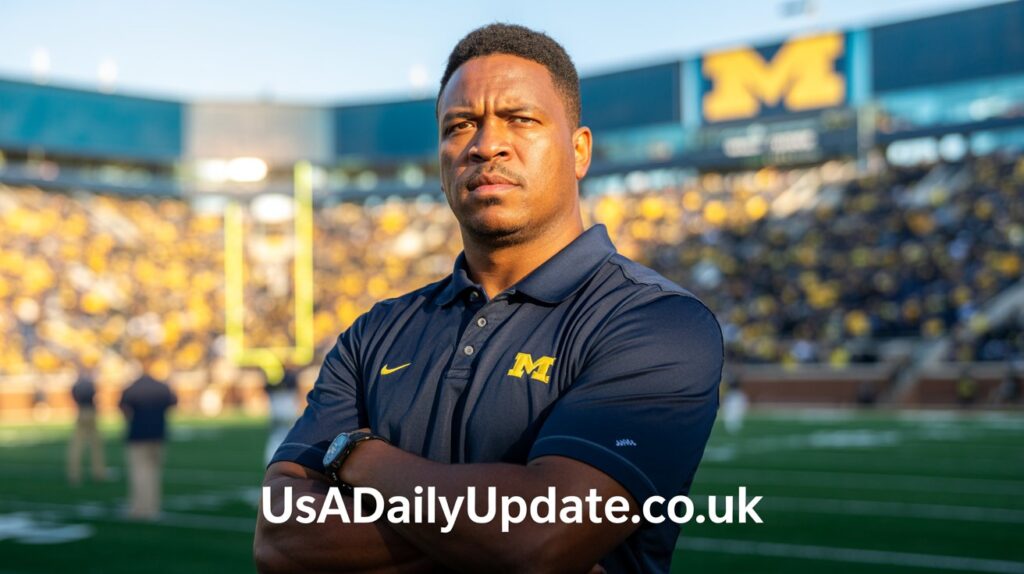
On January 29, 2024, Michigan made it official. Sherrone Moore was named the 20th head coach in program history. The decision surprised no one who had followed his journey. His performance as acting head coach and his long-term contributions made him the obvious choice.
The hiring represented continuity and evolution simultaneously. Moore would maintain Michigan’s identity while adding his own touches. He understood the program’s culture and expectations. There would be no learning curve about what Michigan football should look like.
Athletic director Warde Manuel praised Moore’s character, coaching ability, and connection to the program. The decision balanced respecting tradition with embracing the future. Moore represented both the continuity Michigan wanted and the fresh energy needed.
The contract terms reflected Michigan’s confidence. A five-year deal with competitive Big Ten compensation showed commitment to Moore. The university was investing in him long-term, not making a placeholder hire.
Moore’s introductory press conference revealed his vision. He spoke about maintaining Michigan’s physical identity while evolving strategically. He emphasized recruiting, player development, and representing the university with class. The message resonated with players, recruits, and fans.
Challenges and Expectations as Head Coach
Taking over as head coach brings immense challenges, even in favorable circumstances. Sherrone Moore inherits a program at the peak of success. The expectations are sky-high. Maintaining excellence is harder than building it initially.
Following a Legend Jim Harbaugh left Michigan as a champion after the 2023 national title. Following someone who reached the mountain top creates pressure. Fans expect continued success. Any step backward brings criticism.
Moore must establish his own identity while respecting what came before. This balance is delicate. He needs to be his own coach, not a Harbaugh imitation, while maintaining what made Michigan successful.
Roster Transition Many key players from the championship team exhausted their eligibility or left for the NFL. Moore faces rebuilding while competing at the highest level. This challenge tests every new head coach.
The transfer portal adds complexity to roster management. Players can leave easily, while incoming transfers must fit the culture. Moore must navigate this new landscape while maintaining team cohesion.
Big Ten Evolution The conference is adding USC, UCLA, Oregon, and Washington, creating new challenges. Cross-country travel, unfamiliar opponents, and intensified competition change the landscape. Moore must adapt quickly.
The expanded College Football Playoff also changes calculations. More teams make the playoff, but expectations adjust accordingly. Simply making the playoff won’t satisfy Michigan fans. Championships are expected.
Recruiting Against Elite Programs As head coach, Moore faces even fiercer recruiting competition. Ohio State, Alabama, Georgia, and others pursue the same prospects. He must close deals on elite recruits while maintaining Michigan’s culture.
National championship success helps recruiting, but Moore must leverage it effectively. Recruits want to play for winners, and Michigan can now claim that title. Moore needs to capitalize on this advantage.
Vision for Michigan Football’s Future
Sherrone Moore has articulated a clear vision for Michigan football’s direction. His plan balances tradition with innovation, respecting the past while embracing the future. Understanding this vision gives insight into Michigan’s trajectory.
Sustained Excellence Moore wants Michigan competing for championships annually, not occasionally. This requires consistent recruiting, player development, and coaching. One-time success doesn’t interest him. Building sustained excellence does.
This goal demands depth across the roster. Injuries and early NFL departures happen. Programs with championship depth overcome these losses. Moore is building that depth through recruiting and development.
Midwestern Identity Moore embraces Michigan’s Midwestern values of toughness, work ethic, and humility. He wants players who embody these characteristics. The football should reflect regional identity and pride.
This doesn’t mean Michigan will only recruit locally. But the core values and playing style will remain true to the region. Physical, tough, smart football wins in the Midwest and travels well to championships.
Player Development Focus Moore wants Michigan known as the best place to develop as a player and person. Academic support, life skills coaching, and football development all matter. The holistic approach attracts serious student-athletes.
Parents want their sons attending schools that care about complete development. Moore’s emphasis on this distinguishes Michigan from programs focused narrowly on football. It also aligns with university values.
Innovative While Physical Moore plans to maintain Michigan’s physical identity while incorporating modern offensive concepts. The balance keeps opponents guessing. They must prepare for powerful running and creative passing.
This approach requires versatility in recruiting. Moore needs offensive linemen who can move in space, running backs who can catch, and versatile tight ends. The modern game demands position flexibility.
Comparing Moore to Other Young Head Coaches
Sherrone Moore joins a cohort of young head coaches reshaping college football. Comparing him to peers provides context for his potential. Each brings different strengths and faces unique challenges.
Marcus Freeman (Notre Dame) Freeman took over Notre Dame at 35, similar age to Moore’s hiring. Both were defensive (Freeman) and offensive (Moore) coordinators promoted to head coach. Freeman’s trajectory shows the opportunities and pressures young coaches face.
Dan Lanning (Oregon) Lanning jumped from Georgia defensive coordinator to Oregon head coach. His quick success shows that coordinator-to-head-coach transitions can work. Moore hopes for similar rapid impact.
Kirby Smart (Georgia) While no longer young, Smart’s path from Alabama coordinator to Georgia champion parallels what Michigan hopes for Moore. Smart learned under Nick Saban before applying those lessons. Moore learned under Harbaugh.
Moore’s advantage over some young coaches is his acting head coach experience. That three-game stretch provided a preview and proved his readiness. Many coordinators-turned-head-coaches lack similar trial runs.
Impact on Michigan Football Culture
Sherrone Moore’s influence extends beyond X’s and O’s. His personality and values shape Michigan’s culture. Understanding this cultural impact explains why players and recruits respond to him.
Moore emphasizes family atmosphere within the team. Players aren’t just teammates; they’re brothers. This mindset creates bonds that strengthen during adversity. Teams with strong culture overcome challenges together.
Accountability is another cultural pillar. Moore holds players and coaches to high standards. But the accountability comes with support. He doesn’t just demand excellence; he provides the tools to achieve it.
Education and graduation matter in Moore’s program. He wants players earning degrees and preparing for life after football. This emphasis aligns with Michigan’s academic reputation and attracts quality student-athletes.
Community involvement is encouraged and modeled. Moore wants players giving back and representing the university positively. These values create ambassadors, not just football players.
The culture Moore is building should sustain success beyond his tenure. Strong cultures outlast individual coaches. He’s establishing foundations that will benefit Michigan football for decades.
What Makes Sherrone Moore Different
In a profession full of talented coaches, what distinguishes Sherrone Moore? Several qualities set him apart and explain his rapid rise to one of college football’s premier positions.
Authenticity Moore doesn’t pretend to be something he’s not. His genuine personality resonates with players and recruits. In an era of carefully managed images, authenticity stands out.
Technical Expertise Moore’s mastery of offensive line play is elite-level. Few coaches understand the position’s nuances better. This expertise gives him credibility and makes him an exceptional teacher.
Relationship Builder His ability to connect with diverse personalities unifies teams. Moore relates to different types of players, making everyone feel valued. This skill creates cohesive units from talented individuals.
Composure Under Pressure The 2023 acting head coach stint showcased Moore’s calmness in stressful situations. Great coaches make clear decisions under pressure. Moore proved he possesses this quality.
Growth Mindset Moore continuously learns and evolves. He studies other coaches, attends clinics, and incorporates new ideas. This commitment to improvement suggests he won’t become stagnant.
Conclusion
Sherrone Moore represents Michigan football’s present and future. His journey from offensive line coach to head coach in just three years demonstrates exceptional ability and readiness. The 2023 acting head coach performance proved he could handle the pressure and responsibility. Now, as the permanent head coach, Moore has the opportunity to establish his legacy.
The challenges ahead are significant. Following a national championship, maintaining elite recruiting, and navigating conference expansion all test his leadership. But Moore’s track record suggests he’s prepared for these challenges. His coaching philosophy, player development skills, and cultural vision position Michigan for sustained success.
As Moore begins his head coaching tenure, Wolverine fans have reason for optimism. They have a coach who understands the program, develops players exceptionally, recruits at elite levels, and handles pressure with composure. These qualities suggest Michigan football is in excellent hands.
What aspect of Sherrone Moore’s coaching excites you most? Do you think his promotion from within will prove successful long-term? Share your thoughts about Michigan’s new era, and let’s discuss what the future holds for the Wolverines under Moore’s leadership.
Frequently Asked Questions
How old is Sherrone Moore? Sherrone Moore was born on March 13, 1986, making him 38 years old when he became Michigan’s head coach in 2024. His relative youth compared to many head coaches gives him energy and relatability with current players while bringing sufficient experience from his coaching journey.
What is Sherrone Moore’s coaching salary? While exact figures weren’t publicly disclosed, Moore’s contract is competitive with other Big Ten head coaches. Reports suggest his deal is worth approximately $5 million annually, reflecting Michigan’s commitment to retaining him long-term and competing for top coaching talent.
Did Sherrone Moore play football at Michigan? No, Moore played college football at the University of Louisville from 2005 to 2008 as an offensive lineman. Despite not playing for Michigan, he developed a deep connection to the program through his coaching career and has become a true “Michigan man” through his contributions.
What is Sherrone Moore’s coaching record as head coach? Moore went 3-0 as acting head coach during the 2023 regular season, defeating Penn State, Maryland, and Ohio State. As the official head coach starting in 2024, his record will continue to develop. His acting head coach performance proved his ability to lead the program successfully.
Who did Sherrone Moore replace as Michigan head coach? Moore replaced Jim Harbaugh, who left Michigan after the 2023 season to become head coach of the Los Angeles Chargers in the NFL. Harbaugh departed after winning the national championship, leaving Moore with the challenge of maintaining championship-level success.
What is Sherrone Moore’s offensive philosophy? Moore emphasizes physical, run-first football built on dominant offensive line play. However, his approach also incorporates modern passing concepts and adaptability to personnel. He believes in controlling the line of scrimmage, time of possession, and wearing down opponents through physicality combined with strategic creativity.
Has Sherrone Moore coached in the NFL? No, Moore’s entire coaching career has been in college football. He’s worked at Louisville, Central Michigan, Western Michigan, Cincinnati, and Michigan. His focus has remained on developing college players, recruiting, and building successful college programs rather than pursuing NFL opportunities.
What makes Sherrone Moore a good recruiter? Moore excels at building genuine relationships with recruits and their families. His authenticity, combined with Michigan’s tradition and resources, creates a compelling pitch. His track record developing players, particularly offensive linemen, into NFL prospects also strongly appeals to top recruits considering their futures.
What awards has Sherrone Moore won as a coach? Moore has earned multiple coaching honors, including the Joe Moore Award (given to the nation’s best offensive line unit) and recognition as one of the top recruiters and coordinators in college football. His units have consistently ranked among the nation’s best in various offensive categories.
Will Sherrone Moore’s coaching style differ from Jim Harbaugh’s? Moore will maintain core elements of Michigan’s identity, particularly physical, run-oriented football. However, he’ll add his own personality and potentially incorporate more modern offensive concepts. The foundation will remain similar, but Moore will establish his unique approach while respecting successful traditions.
Also Read Usadailyupdate.co.uk