Introduction
You’ve probably heard “67” mentioned in drill music videos, seen it in social media comments, or noticed it tagged in urban areas. If you’re scratching your head wondering what this number actually means, you’re not alone. Slang evolves rapidly, and keeping up with the latest terms can feel like learning a new language.
So what does 67 mean in slang? The answer takes us into the world of UK drill music, London street culture, and postcode identity. This number represents much more than just digits. It’s a cultural marker, a crew identifier, and a symbol deeply rooted in South London’s music scene.
This article will explain the origins of 67, its connection to UK drill music, how it’s used in different contexts, and why understanding this slang matters. Whether you’re a music fan, a parent trying to understand youth culture, or simply curious about modern slang, you’ll find clear answers here.
Let’s break down everything you need to know about this influential piece of street terminology.
The Origin of 67 in UK Drill Culture
Connection to London Postcodes
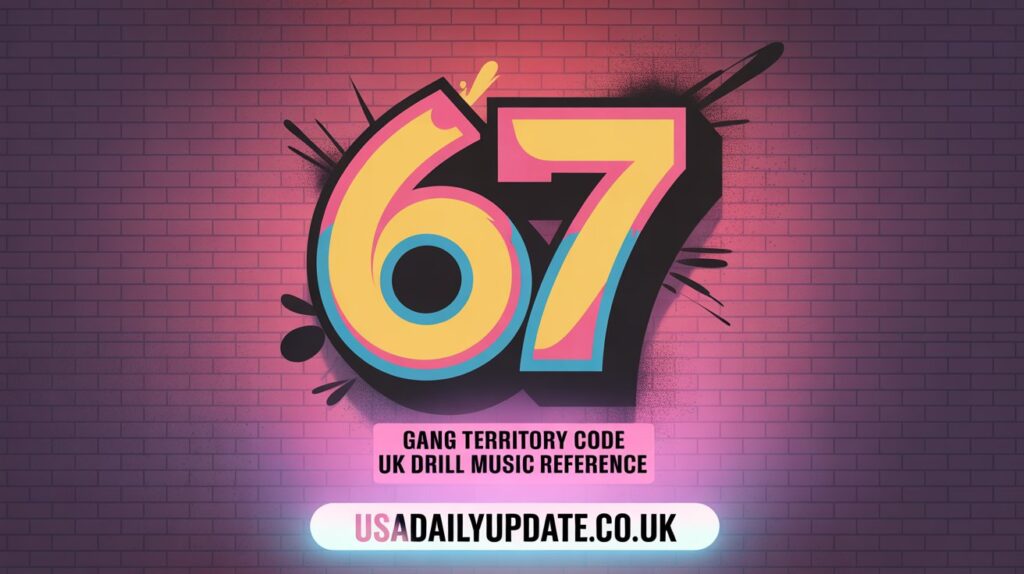
The term 67 originates from the London postcode SW2, which covers the Brixton and Streatham areas of South London. In UK street culture, postcodes aren’t just addresses. They represent territories, communities, and identities.
The numbers in SW2 add up to 6 and 7 when separated (S is the 19th letter, W is the 23rd, but in street terminology, people often simplify to just the SW2 part). More directly, 67 references the gang and music collective from this area who adopted this name.
London’s postcode system divides the city into sections. SW stands for South West, and the number 2 specifies a particular district. Young people from these areas often rep their postcodes with pride, using them as identifiers in music and street culture.
This territorial identification through postcodes is common throughout London. You’ll hear references to E9, N15, SE1, and many others in UK drill and grime music. Each number represents specific neighborhoods with their own cultures and histories.
The Music Collective Behind the Name
67 is also the name of a highly influential UK drill music collective from the Brixton area. The group formed in the early 2010s and became pioneers of the UK drill scene.
Members include rappers like LD, Monkey, Dimzy, Liquez, and ASAP. Their music videos racked up millions of views and helped define the sound and aesthetic of British drill. They brought raw, authentic storytelling about street life to mainstream attention.
The collective’s influence extends beyond music. They popularized certain slang terms, fashion choices, and cultural attitudes. When young people reference 67 today, they might mean the group specifically or the broader cultural movement they represent.
67’s music often features dark, menacing beats with lyrics about street life, rivalry, and survival. Their authentic approach resonated with youth across the UK and internationally. They helped put UK drill on the global map before the genre exploded worldwide.
Understanding UK Drill Music Context
What Makes Drill Music Unique
To fully understand what does 67 mean in slang, you need context about UK drill music. This genre emerged in Chicago in the early 2010s before being adapted by London artists.
UK drill features slow, heavy beats with trap influences. The tempo typically sits around 130 to 150 BPM. The production is dark and atmospheric, often using sliding 808 bass and menacing melodies. Lyrics focus on street life, gang activity, and territorial pride.
The genre faced controversy from its inception. Authorities linked drill music to violence, leading to censorship attempts. Some artists faced restrictions on performing or had videos removed. This only increased the genre’s underground appeal and cultural significance.
UK drill differs from its Chicago predecessor in several ways. British artists incorporated local slang, referenced UK specific locations, and developed distinct flows. The accent and delivery became part of the genre’s identity. Groups like 67 helped establish these UK specific characteristics.
How Slang Functions in Drill Culture
Drill music created and popularized countless slang terms. The genre acts as a transmission mechanism for street language to reach wider audiences. What does 67 mean in slang connects directly to this linguistic ecosystem.
Artists use coded language for multiple reasons. Some terms disguise illegal activities from authorities. Others serve as insider signals that separate community members from outsiders. Many simply add flavor and authenticity to the music.
Common drill slang includes terms like “opps” (opposition/enemies), “shank” (knife), “mandem” (group of friends), “ends” (neighborhood), and hundreds more. Numbers often replace words for added obscurity. This numeric coding extends beyond just 67.
The slang evolves constantly. Terms popular two years ago might sound dated today. New phrases emerge from specific songs or incidents. Understanding this context helps you grasp why certain numbers and codes carry significance in drill culture.
Different Meanings and Uses of 67
Representing Territory and Identity
When someone says 67 in slang, they’re often claiming or acknowledging South London territory. It’s a geographical marker that signals where someone is from or what community they represent.
This territorial usage appears in music lyrics, social media bios, graffiti, and conversation. Saying “I’m 67” or “free 67” expresses allegiance or support. It’s similar to how people might say they’re from Brooklyn or represent the West Side.
The territory identification runs deep. It’s not just about physical location. It encompasses shared experiences, cultural understanding, and community bonds. For young people in these areas, their postcode becomes part of their identity.
Outsiders using these terms can be problematic. Claiming a territory you’re not from is considered disrespectful or even dangerous. The codes carry weight in street culture. They’re not just casual slang to be thrown around without understanding.
Musical and Cultural References
In music discussions, 67 refers to the collective’s songs, members, or influence. Fans might say “that’s 67 style” to describe a particular drill sound or approach.
The group’s music videos often feature visual codes and symbols. Hand signs, clothing colors, and specific locations all carry meaning. Understanding these elements helps decode what does 67 mean in slang within musical contexts.
Cultural influence extends to fashion and attitude. The baggy, dark aesthetic associated with UK drill partly stems from groups like 67. Balaclavas, puffer jackets, and tracksuits became signature looks. These fashion choices spread globally as drill music gained international popularity.
References to 67 appear in songs by other UK artists, showing respect or acknowledging influence. International drill artists sometimes namedrop London collectives, demonstrating the global reach. The number became synonymous with authentic UK drill culture.
Social Media and Internet Usage
On platforms like Instagram, Twitter, and TikTok, 67 appears in usernames, captions, and hashtags. Users signal affiliation, show support, or reference the music they enjoy.
The hashtag #67 connects posts related to the group, the area, or drill culture generally. Scrolling through reveals music videos, tribute posts, news about members, and fan content. It creates a digital community around the collective identity.
Comments sections often feature “Free 67” or “67K” (where K means opposition). These expressions show loyalty or rivalry. They’re part of the ongoing territorial narratives that play out online as much as in physical spaces.
Young people use 67 as shorthand in conversations. A message saying “listening to 67” immediately communicates they’re playing UK drill music. It’s efficient communication within communities that share cultural knowledge. Context determines exact meaning, but the South London connection remains constant.
The Broader Impact of Postcode Culture
How UK Youth Identify by Area
Postcode identity extends far beyond 67. Throughout the UK, especially in London, young people deeply identify with their local areas. This geographic loyalty shapes social circles, rivalries, and cultural expression.
The postcode system creates clear boundaries. Growing up in N15 (Tottenham) differs significantly from growing up in E9 (Hackney), even though they’re relatively close geographically. Each area has distinct characteristics, challenges, and cultures.
This territorial identification can be positive or negative. It creates strong community bonds and local pride. Young people feel connected to their areas and the people in them. They support each other and celebrate their neighborhoods.
However, postcode loyalty also fuels rivalries. Neighboring areas sometimes have longstanding tensions. These conflicts can escalate into serious violence. Music often reflects these territorial disputes, with artists dissing rival postcodes in lyrics.
Positive and Negative Aspects
Understanding what does 67 mean in slang requires acknowledging both positive and problematic elements. The territorial pride isn’t inherently negative. It represents community, belonging, and cultural identity.
Many young people find purpose and connection through their postcode identity. In areas with limited opportunities, local pride provides something meaningful. Music collectives like 67 gave youth creative outlets and potential career paths.
The negative aspects involve violence, gang activity, and limited worldviews. When postcode identity becomes too rigid, it restricts movement and opportunity. Young people might avoid certain areas due to perceived danger. This limits access to education, employment, and social connections.
Authorities and community organizations work to address harmful aspects while preserving positive community bonds. Programs aim to reduce territorial violence while supporting local pride and cultural expression. It’s a delicate balance that communities continue navigating.
67’s Influence on Modern Slang
Terms and Phrases They Popularized
The 67 collective introduced and popularized numerous slang terms now common in UK youth culture. Their lyrics spread phrases that became part of everyday language.
Terms like “splash” (stab), “bruck” (break), “kweff” (stab), and countless others entered mainstream slang through their music. Young people across the UK now use these words, often without knowing their origins.
The group’s influence on pronunciation and delivery affected how young Londoners speak. The drill flow, with its distinctive rhythm and emphasis, influenced conversational patterns. You can hear echoes of drill cadence in how youth communicate.
Numeric codes became more prevalent partly due to groups like 67. Using numbers to represent words or areas gained popularity. This coding adds layers of meaning to seemingly simple statements.
Global Spread of UK Drill Language
UK drill’s international success carried British slang worldwide. Artists in New York, Australia, the Netherlands, and elsewhere now incorporate UK drill elements, including linguistic choices.
What does 67 mean in slang becomes relevant even outside London because of this cultural export. International fans learn the terminology to better understand and appreciate the music. Some adopt the slang in their own speech and music.
The global drill community shares vocabulary across borders. American drill artists might reference UK terms, and vice versa. This cross pollination creates a transnational street culture with shared language.
However, authenticity concerns arise when people far removed from the culture adopt the slang superficially. Using terms without understanding their origins or significance can seem inauthentic or disrespectful. The balance between appreciation and appropriation remains debated.
Why Parents and Educators Should Understand This Slang
Decoding Youth Communication
If you’re a parent, teacher, or work with young people, understanding what does 67 mean in slang helps you interpret their communication. Youth culture can seem impenetrable, but learning key terms builds bridges.
Young people don’t always mean harm when using street slang. Often they’re simply engaging with popular culture. A teenager listening to 67 or using related terms isn’t necessarily involved in gang activity. Context and behavior patterns matter more than isolated word choices.
That said, certain phrases combined with behavioral changes warrant attention. If a young person suddenly fixates on territorial identity, shows signs of gang involvement, or expresses violent ideas, that’s concerning regardless of specific slang used.
Open, nonjudgmental conversations work better than accusations or panic. Ask questions about the music they enjoy. Show genuine interest in their cultural references. This approach builds trust and keeps communication channels open.
Distinguishing Music Appreciation from Gang Involvement
Most young people who enjoy drill music aren’t gang members. They appreciate the artistry, relate to themes of struggle and survival, or simply like the sound. Enjoying 67’s music doesn’t automatically indicate problems.
Warning signs of actual gang involvement include secretive behavior, unexplained money or possessions, new peer groups with concerning influences, territorial obsession beyond music appreciation, and aggressive or fearful behavior patterns.
Music itself rarely causes violence. Research consistently shows complex factors create gang involvement including poverty, lack of opportunity, family instability, and community violence. Drill music reflects these realities rather than creating them.
Supporting positive engagement with hip hop culture helps. Encourage creative outlets like writing lyrics, producing beats, or discussing music’s cultural significance. This channels interest constructively while maintaining connection.
The Controversy Surrounding Drill Music
Police and Government Response
UK authorities have taken controversial stances toward drill music. Police sought to ban certain music videos and performances, arguing they incite violence. Some artists faced criminal behavior orders restricting their musical activities.
In 2018, London’s Metropolitan Police successfully pressured YouTube to remove drill videos. They claimed the content glorified violence and escalated gang tensions. This sparked debates about free speech, artistic expression, and systemic inequality.
Critics argue authorities scapegoat drill music instead of addressing root causes of youth violence. They point to decades of social inequality, educational underfunding, and lack of opportunity in affected communities. Music becomes an easy target rather than addressing complex systemic issues.
The censorship attempts may have backfired. Restricted content gained mystique and underground credibility. Artists found ways around restrictions using coded language. The controversy brought international attention, paradoxically helping UK drill’s global expansion.
Free Speech and Artistic Expression Debates
The 67 collective and similar groups exist at the intersection of free speech debates. Their music describes illegal activities and violent scenarios. But is this reportage of reality, artistic expression, or incitement?
Supporters argue drill artists document their lived experiences. The music reflects harsh realities many young people face. Censoring these voices silences marginalized communities and prevents understanding of their struggles.
Opponents claim the lyrics encourage violence and criminal behavior. They point to specific incidents allegedly inspired by drill music. Some argue the genre’s popularity normalizes harmful activities among impressionable youth.
Legal and ethical questions remain unresolved. Where should lines be drawn between free expression and public safety? Who decides which art is acceptable? These debates continue as drill’s popularity grows.
How 67 Fits Into Hip Hop History
UK’s Unique Contribution to Hip Hop
British hip hop developed its own identity separate from American rap. Grime emerged in the early 2000s as a distinctly UK sound. Drill represented the next evolution, incorporating American influences while maintaining British characteristics.
Groups like 67 stand in a lineage of UK hip hop artists who documented street life authentically. From early grime pioneers to modern drill artists, British rappers have consistently provided unfiltered perspectives on urban reality.
The UK contribution to hip hop includes unique production styles, flows, and lyrical approaches. British slang, accents, and cultural references created music that sounds distinctly different from American rap. This authenticity attracted global audiences seeking fresh perspectives.
What does 67 mean in slang connects to this broader history. The collective represents a specific moment when UK drill crystallized into a major cultural force. Their influence will likely be studied by future music historians as pivotal to British hip hop’s development.
Parallels to Other Regional Hip Hop Movements
Every hip hop region develops its own slang, style, and identity. Atlanta has trap culture, New York has its own drill scene, Chicago pioneered original drill, and London developed UK drill. Each shares core hip hop values while expressing local flavors.
The territorial pride in UK drill parallels gang culture in American hip hop history. From East Coast vs West Coast rivalries to Chicago’s block-by-block territories, geographic identity has always influenced rap music.
67’s role in UK drill resembles how groups like Migos shaped Atlanta trap or Chief Keef influenced Chicago drill. These artists define genres, popularize slang, and create templates others follow. They become synonymous with their movements.
Understanding these parallels helps contextualize UK drill within hip hop’s global evolution. It’s not isolated or unprecedented. It’s the latest chapter in hip hop’s ongoing story of giving voice to marginalized urban youth worldwide.
Modern Usage and Evolution
How the Term Has Changed Over Time
What does 67 mean in slang has evolved since the collective’s peak popularity. In the early 2010s, it primarily referenced the specific group and their immediate circle. Over time, the meaning broadened.
Today, 67 can reference the music genre stylistically, the South London area generally, or a nostalgic period in UK drill history. Newer drill fans might use it differently than people who grew up in Brixton during the group’s formation.
Some original members faced legal troubles or left the music industry. This changed the group’s dynamics and output. The collective’s reduced activity means newer references often look backward rather than discussing current material.
The term now carries historical weight. When someone mentions 67, they might be referencing golden era UK drill rather than current events. It’s becoming a classic reference point, like how American rap fans reference N.W.A. or Wu-Tang Clan.
Current Relevance in Youth Culture
Despite changes, 67 remains relevant in UK youth culture. Their music continues streaming millions of times. New generations discover the collective through YouTube and Spotify.
Contemporary UK drill artists still show respect to 67’s pioneering role. They acknowledge the collective’s influence in interviews and occasionally reference them in lyrics. This keeps the name circulating among current fans.
The slang extends beyond just music fans. Young people in South London still identify with the postcode and number. It’s woven into the area’s cultural fabric beyond any single music group.
Internationally, 67 represents authentic UK drill to fans worldwide. When drill scenes emerge in new countries, they often study UK pioneers including 67. The collective’s influence ripples through global hip hop culture.
Related Slang and Terms You Should Know
Other UK Drill Terminology
Understanding what does 67 mean in slang becomes easier when you know related terms. Here are essential UK drill vocabulary words:
Mandem: Your group of friends or crew. Used like “the boys” or “the squad.”
Opps: Opposition or enemies. Refers to rival gang members or people you have conflict with.
Ends: Your neighborhood or local area. “My ends” means where you’re from.
Crud/Ching/Shank: Various terms for knives or stabbing. These violent references are common in drill lyrics.
Bando: Abandoned building used for illegal activities. Often where drugs are sold or stored.
Peng: Attractive person or high quality item. Can describe anything appealing.
Wagwan: “What’s going on?” A greeting derived from Jamaican Patois, common in UK street slang.
Numbers and Codes in Street Slang
67 isn’t the only number with slang significance. Numeric codes appear throughout UK street culture:
150: Refers to a Brixton gang and music group, rivals to 67. The territorial conflict featured prominently in drill music.
410: Represents Brixton’s Angell Town estate. Another collective with significant drill influence.
Zone 2: Peckham based group. The number references their postcode area SE15.
12: Police. Derived from the TV show “Adam-12” about Los Angeles police officers.
21: Gun. The numbers look like a gun when typed together: 2️⃣1️⃣
Numbers provide plausible deniability. If authorities question lyrics, artists can claim they’re just numbers without specific meaning. This coding protects artists while communicating clearly to intended audiences.
Conclusion
Understanding what does 67 mean in slang opens a window into UK drill culture, postcode identity, and modern youth communication. This number represents far more than digits. It’s a cultural marker tied to South London, pioneering music, and community identity.
The 67 collective helped define UK drill’s sound and aesthetic. Their influence spread globally as the genre gained international popularity. The slang, style, and attitudes they popularized continue shaping youth culture years later.
Whether you’re a music fan, parent, educator, or simply curious about modern slang, understanding terms like 67 provides valuable cultural literacy. It helps decode youth communication and appreciate the complex subcultures shaping contemporary life.
Remember that slang constantly evolves. What does 67 mean in slang today might shift tomorrow as new artists emerge and culture changes. Staying curious and open to learning keeps you connected to these dynamic cultural movements.
Have you encountered 67 in music, conversation, or online? How has UK drill music influenced your understanding of youth culture? Share your thoughts and experiences to keep this conversation going.
FAQs
What does 67 mean in slang? 67 refers to a South London postcode area (SW2) and the influential UK drill music collective from Brixton. The term represents territorial identity, the music group specifically, or UK drill culture more broadly depending on context.
Is 67 a gang or a music group? 67 is primarily a music collective that emerged from South London’s street culture. While members had connections to street life, they’re known publicly for their pioneering UK drill music rather than gang activity specifically.
Why do UK rappers use numbers instead of words? Numbers provide coded communication that’s harder for authorities to use as evidence. They represent territories through postcodes, create insider language that separates community members from outsiders, and add layers of meaning to lyrics.
Is listening to 67 dangerous or illegal? Listening to 67’s music is neither dangerous nor illegal. They’re legitimate artists on streaming platforms. Enjoying drill music doesn’t indicate gang involvement, though parents should monitor overall behavior patterns rather than just music choices.
What area of London does 67 represent? 67 represents the Brixton and Streatham areas of South London, specifically the SW2 postcode district. This area has a rich cultural history and has produced numerous influential UK hip hop artists.
Are any 67 members still making music? Some original 67 members continue making music individually, though the collective’s activity has decreased. Legal issues and personal circumstances affected the group’s dynamics over time, leading to reduced collaborative output.
How did 67 influence UK drill music? 67 helped pioneer UK drill’s distinctive sound, visual aesthetic, and lyrical content. They were among the first to adapt Chicago drill for British audiences, incorporating local slang, references, and production styles that defined the genre.
What’s the difference between 67 and 150? Both are South London drill collectives, but they represent different areas and had a longstanding rivalry. 67 is from Brixton (SW2), while 150 also has Brixton connections but different territorial claims. Their conflict featured prominently in their music.
Why was 67’s music controversial? Their lyrics described street violence, drug dealing, and gang activity explicitly. Authorities claimed the music incited real world violence, leading to censorship attempts. This sparked debates about free speech, artistic expression, and scapegoating music for social issues.
Can someone outside London use 67 slang? People can appreciate and discuss the music and culture, but claiming to “be 67” or representing the area without genuine connection is considered disrespectful. Appreciating the culture differs from appropriating identity markers tied to specific communities and lived experiences.
Also Read Usadailyupdate.co.uk